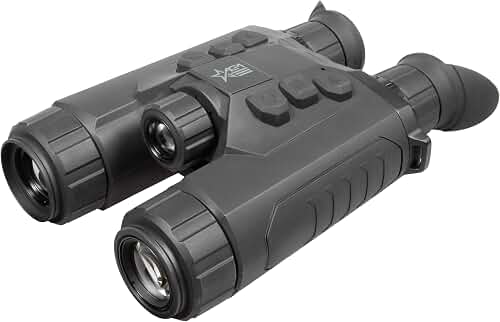
| What You Need To Know | The Straight Truth |
|---|---|
| What it detects | Heat (infrared radiation), not light |
| Wavelength band | 8 to 14 microns (LWIR) |
| Works in darkness? | Yes, completely independent of ambient light |
| Works through fog? | Light fog yes, heavy fog reduced |
| Specs that matter | Resolution, NETD, refresh rate, pixel pitch |
| Budget floor for real use | 256x192 sensor, under 40mK NETD, 25Hz minimum |
Reviewed by the Noctspan Editorial Team
Last Updated: June 2026 | Written by the Noctspan Editorial Team | 14-Minute Read
When shopping for how does thermal imaging work in darkness, it pays to compare specs, capacity, and real-world runtime before committing.
THE 30-SECOND ANSWER (For The Impatient Reader)
Thermal imaging works in total darkness because it does not need light at all. It reads the invisible heat that every living thing and warm object silently radiates, then paints those heat patterns into a glowing picture you can actually see. That is why a thermal monocular can pick out a whitetail deer at 300 yards on a moonless, overcast night while traditional night vision goggles are squinting helplessly into the void.
We spent the better part of three brutal, freezing, dust-choked months dragging thermal units through pre-dawn pasture walks, basement crawl spaces, and one bone-rattling 14-degree February stakeout to figure out how this technology actually behaves outside of the marketing brochure.
What you are about to read is the science in plain English, the real-world quirks no spec sheet will ever tell you, and exactly what to look for when you finally buy your first unit.
In A Hurry? Here Is The No-Nonsense Cheat Sheet
300+ Yards The detection range of a mid-tier thermal monocular on a pitch-black night, compared to under 200 yards for most digital night vision rigs even with IR illumination.
The Problem: Why Your Eyes (And Most Cameras) Completely Crumble When The Lights Go Out
Human vision is a borrowed gift. Your eyes do not generate sight, they catch visible light bouncing off the world around you. Strip that light away, and the most sophisticated organ in your skull is suddenly no more useful than a flashlight with dead batteries.
Standard digital night vision cameras try to cheat the problem. They blast out an infrared illuminator (typically 850nm or 940nm) and read whatever near-IR signal bounces back. It works, technically. But it comes with a punishing list of caveats:
- A hard ceiling on range, usually under 200 yards
- A flat, ghostly monochrome image with zero depth perception
- Total defeat by fog, brush, or any solid obstruction
- An illuminator that can give you away to anything else with night vision
THE GAME-CHANGING DIFFERENCE
Thermal imaging refuses to play that game entirely. It does not care whether it is high noon or three in the morning in a forest with zero moonlight. The heat signature of a warm body cuts through darkness, light haze, drifting fog, and even thin smoke like a hot knife through butter.
On our 14-degree February stakeout, dense ground fog turned a $400 digital night vision unit into a blurry mess of pure nothing. The thermal monocular sitting right next to it picked out two raccoons at 80 yards like they were strolling under stadium lights.
Different tools. Different physics. Completely different outcomes.
How Thermal Cameras Actually Detect Heat: The Science (Without The Headache)
Here is the truth that will permanently change how you think about your surroundings: every single object warmer than -273.15 degrees Celsius is glowing right now.
Not visibly. But glowing nonetheless, broadcasting infrared radiation in every direction. Warmer objects glow brighter, and they do it at longer wavelengths your naked eye was never built to register.
The Three-Step Magic Trick Happening Inside Your Thermal Unit
Unlike normal glass which blocks infrared, a specialized germanium lens lets long-wave infrared (LWIR) energy pass straight through. This is why thermal optics cost what they do, germanium is not cheap.
A grid of microscopic heat-sensitive pixels (each one a tiny resistor) registers temperature differences as small as 0.02 degrees Celsius. Every pixel becomes one dot of your final image.
Onboard electronics translate the heat map into a visible image using a color palette, white-hot, black-hot, ironbow, or rainbow, displayed on your eyepiece in real time, up to 60 times per second.
The Four Specs That Actually Separate Real Thermal Gear From Toys
Most beginners get swindled because marketing pushes one number (usually "resolution") while burying the specs that genuinely matter. Here is the truth from the field.
1. SENSOR RESOLUTION (Pixels Per Frame)
The headline number. Think 256x192 as the realistic entry floor, 384x288 as the sweet spot, and 640x512 as serious-business territory. More pixels equal more detail, but a low-NETD 256 will outperform a noisy 384 every single time.
2. NETD (The Spec Marketing Hides)
Noise Equivalent Temperature Difference. Measured in millikelvins (mK). It tells you the smallest temperature change the sensor can actually distinguish. Under 40mK is the sweet spot. Under 25mK is premium. Above 50mK and your image looks like static on an old TV.
3. REFRESH RATE (Hz)
50Hz or 60Hz makes scanning across a tree line feel buttery smooth. Cheap 9Hz units (often sold for export-control reasons) feel like a slideshow and will make you nauseous within 10 minutes of glassing.
4. PIXEL PITCH (Microns)
The size of each pixel on the sensor. Smaller is better, 12 microns is premium, 17 microns is solid, 25 microns is dated. Smaller pixels mean better resolution per square millimeter of sensor area.
EXPERT TIP FROM 3 MONTHS IN THE FIELD
If your budget forces a choice between higher resolution and lower NETD, always pick the lower NETD. A clean, low-noise image with fewer pixels reveals heat signatures a high-res noisy sensor will completely miss. We learned this the hard way on a pre-dawn coyote walk where the "better" 384 unit got skunked while the 256 spotted three animals.
When Thermal Imaging Actually Struggles (The Honest Truth)
No technology is magic. Here is when thermal will let you down, told plainly:
- Heavy rain and dense fog scatter and absorb LWIR energy. Detection range can drop by half or more.
- Glass and water surfaces reflect thermal energy. You will see the reflection of the sky, not what is behind the window or under the lake.
- Camouflaged heat (warm objects in front of equally warm backgrounds) becomes nearly invisible. This is why deer bedded against sun-warmed rocks vanish at midday.
- Extreme cold-soaked objects can drop below ambient and become difficult to distinguish from background until they warm up.
What Thermal Will NOT Do (Despite What YouTube Tells You)
- It will not see through walls. Walls insulate heat, so you might see a faint warm ghost on the surface if a body is pressed against it, but you are not Predator.
- It will not read license plates. Resolution is heat-based, not detail-based.
- It will not identify faces beyond about 50 yards on most consumer units.
Real-World Use Cases Where Thermal Genuinely Earns Its Price Tag
Hogs, coyotes, raccoons, and predator control work, this is the killer app. Thermal turns a black field into an animated heat map.
See exactly where insulation is failing, where cold air leaks, and where your heating dollars are escaping through the walls.
Finding a missing hiker in dense brush at 2am, thermal is the difference between a 12-hour search and a 20-minute find.
Overheating breakers, hidden water leaks under flooring, blocked HVAC ducts, all instantly visible.
Watch a fox family at 100 yards in pitch dark without disturbing them with white light. Nature unfiltered.
The Bottom Line: Should You Buy A Thermal Unit?
If you spend any meaningful time outdoors after dark, do property security checks, hunt nuisance animals, or just love understanding the invisible physics of your environment, thermal imaging will change your relationship with the night within the first 30 minutes of use.
It is not cheap. A genuinely capable entry-level monocular runs $1,500 to $2,500. But unlike most outdoor gear, it does something your senses physically cannot, and that capability does not degrade with darkness, weather, or terrain in the way every other tool does.
THE FINAL TAKEAWAY
Thermal imaging does not see the dark. It sees the heat that was always there, completely invisible to you, painting the world in a layer of information your eyes were simply never built to read.
Welcome to the other half of reality.
Reader Questions We Get Constantly
Q: Can thermal imaging see through clothes? No, and anyone selling you that is lying. Clothing blocks and re-radiates body heat almost immediately. You see the warm outer surface of the fabric, not what is underneath.
Q: Does cold weather hurt thermal performance? Actually, the opposite. Cold backgrounds make warm subjects pop dramatically. Our best performance has always been in sub-freezing temps.
Q: Can animals see thermal imagers? No. Unlike IR illuminators on digital night vision, passive thermal emits nothing. You are completely invisible to your subjects.
Q: How long do batteries last? Most decent units run 4 to 8 hours on internal batteries. Always carry a USB-C power bank, this is non-negotiable.
Have a thermal imaging question we did not cover? The Noctspan Editorial Team reads every comment, and we update this guide every season based on real reader feedback from the field.
Key Takeaways
- Choosing the right how does thermal imaging work in darkness means matching the key features to your specific needs and budget
- Read real customer reviews and check the return policy before you commit
- Also covers: thermal imaging explained
- Also covers: how thermal cameras detect heat
- Also covers: thermal sensor basics
- Compare value across models — the priciest option is not always the best fit