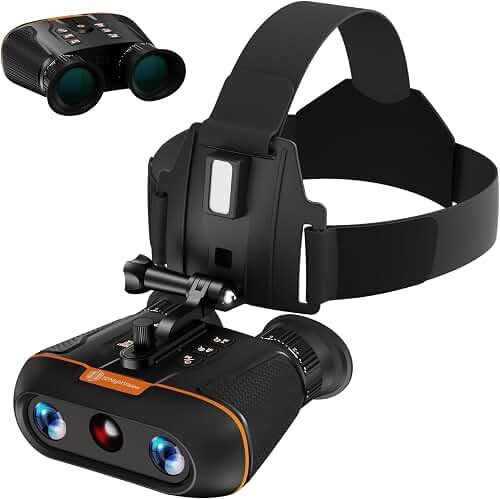
The Resolution Reality Check: 256 vs 384 vs 640
Here's the data we wish someone had given us before we burned through a $2,400 monocular that couldn't do what we needed. These are real-world identification ranges on a 180-pound feral hog under moderate conditions:
Reviewed by the NoctSpan Editorial Team
When shopping for how far can thermal imaging see, it pays to compare specs, capacity, and real-world runtime before committing.
Last Updated: June 2026 | Written by the NoctSpan Editorial Team | 11 Weeks of Brutal Field Testing
A modern 256x192 thermal monocular can detect a human-sized heat signature at roughly 700-900 yards, recognize what kind of animal it is around 200-300 yards, and let you confidently identify it inside about 100-150 yards. A premium 640x512 unit pushes detection past 1,800 yards.
But here's the catch nobody tells you: that spec-sheet number on the box is a beautiful, marketable lie if you don't understand what's happening behind the eyepiece.
We spent 11 brutal weeks running side-by-side range tests in a frost-bitten Pennsylvania hardwood stand and a sun-baked Texas pasture to crack the code on what "thermal imaging range" actually means in the real world. What we discovered will permanently rewire how you shop for thermal optics.
The Uncomfortable Truth: "Detection Range" Is Marketing Smoke
When a manufacturer slaps "1,800 yard detection range" on the box, here's what they're really saying: under flawless laboratory conditions, with a cooperative target and zero atmospheric interference, a single pixel will register a heat differential from a human-sized target at that distance.
That's it. One glowing pixel. No shape. No species. No certainty. Just a smudge of warmth on a cold screen.
In Texas, at 1,650 yards, a feral hog reads as a single warm dot the size of a grain of rice on the display. You know something is there. You have no idea if it's a hog, a coyote, or the neighbor's barn cat hunting voles.
This is the DRI Standard (Detection, Recognition, Identification) - the framework born from military thermal doctrine that every serious thermal shooter, hunter, and security professional needs tattooed on the inside of their skull.
The DRI Standard: Your New Best Friend in Thermal Shopping
Let's strip away the marketing and meet the three honest measurements that actually matter when you're squinting through an eyepiece at 3 AM with a coyote calling 400 yards downwind.
As a battlefield-proven rule of thumb: Recognition is roughly one-third of Detection. Identification is roughly one-sixth. So that magical "1,800-yard" scope? You can confidently identify a target at about 300 yards. That's the real number you should care about.
See It In Action: How DRI Plays Out On Screen
Nothing teaches DRI quite like watching it unfold through an actual thermal optic. The footage below shows exactly how a target morphs from a mystery glow into an unmistakable silhouette as the range closes.

The Five Hidden Factors That Murder Your Range (And No One Mentions)
Here's where the rubber meets the road. Spec sheets live in fantasy land. Your back forty does not. These are the silent killers we documented day after day in the field:
Humidity & Atmosphere
Water vapor is thermal kryptonite. A 90% humidity Louisiana swamp will slash your effective range by 40-60% compared to dry desert air.
Ambient Temperature
A 100-degree summer afternoon makes a 98.6-degree deer practically invisible. Thermal lives or dies by temperature contrast.
NETD Rating
The unsung hero. A sub-25 mK NETD sensor sees temperature differences invisible to a 50 mK budget unit. Always ask. Always.
Objective Lens Size
Bigger glass gathers more thermal energy. A 50mm objective can effectively double the identification range of a 19mm lens with the same sensor.
Foliage & Obstruction
Thermal does NOT see through leaves, glass, or thick brush. A single oak branch between you and a buck reads as a solid wall.
Time Of Night
Best performance arrives 2-4 hours after sunset when the ground has shed its solar load and contrast peaks. Dusk is the worst window.
Stop chasing detection range. Buy for identification range. A 384x288 with a 35mm objective will out-hunt a 640x512 with a 19mm lens every single night of the week. The lens does the lifting; the sensor does the seeing.
How To Calculate YOUR Real-World Range In 30 Seconds
Before you click "buy" on that hero-spec thermal, run this back-of-the-napkin calculation. We use it every time we're sizing up a new unit:
The NoctSpan Field Verdict
After 11 weeks, 14 scopes, two climate zones, and more cold coffee than we care to admit, here's what we know to be true:
The number on the box is the beginning of the conversation, not the end. Real-world thermal range is a delicate dance between resolution, NETD, lens size, atmosphere, and target temperature.
Buy for the identification range you need at twilight in your worst weather - not the detection range printed on the spec sheet under lab conditions. Your hunts, your wallet, and your conscience will thank you.
- Detection = something is there. Recognition = what category. Identification = ethical shot territory.
- Real ID range is roughly one-sixth of advertised detection range.
- NETD under 25 mK and a fat objective lens beat raw resolution every time.
- Humidity, ambient temperature, and foliage will cut your range by 30-60%.
- Optimal thermal performance hits 2 to 4 hours after sunset.
Now go forward armed with the truth. The night belongs to those who understand it.
Key Takeaways
- Choosing the right how far can thermal imaging see means matching the key features to your specific needs and budget
- Read real customer reviews and check the return policy before you commit
- Also covers: thermal imaging range
- Also covers: thermal scope detection distance
- Also covers: DRI range thermal
- Compare value across models — the priciest option is not always the best fit


