At a Glance: The Numbers That Matter
| Metric | The Reality |
|---|---|
| Price spread across generations | $80 — $4,200+ |
| Detection range gap | 75 yds (Gen 1) vs. 300+ yds (Gen 3) |
| U.S. military standard | Gen 3 (period) |
| Realistic battery life | 20 hrs (analog) vs. 4–6 hrs (digital) |
| "Gen 4" status | Marketing label, not an Army-recognized tier |
Reviewed by the NoctSpan Editorial Team
Last Updated: June 2026 | Written by the NoctSpan Editorial Team | 15-minute read
Finding the right night vision generations explained comes down to matching the features to how you will actually use it.
> "The price jumps from $80 to $4,000, and almost nobody bothers to explain why. After three weeks in the Pennsylvania woods with four very different units, I can finally tell you."
If you've spent more than ten minutes shopping for night vision, you've slammed face-first into the "generation" debate. Gen 1, Gen 2, Gen 3, Gen 4 — the prices scale a fifty-fold cliff with almost no plain-English explanation of why.
After dragging a handful of units across a wooded property in central Pennsylvania for three soggy, frost-bitten weeks last fall, here's the short version of night vision generations — plus exactly how to figure out which one you actually need.
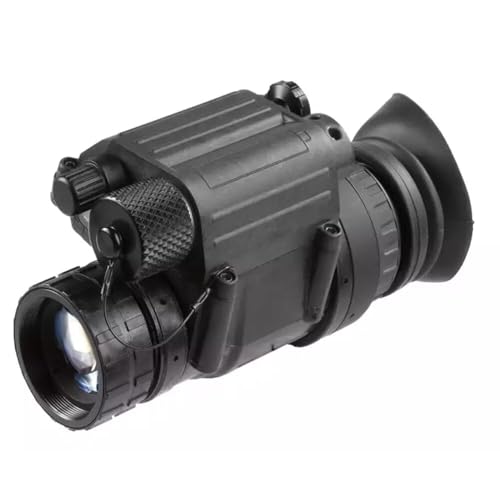
- High-Performance Elite FOM 2000+ Gen 3 Auto-Gated IIT: Features a P45-White Image Intensifier Tube with an impressive FOM 2000+ rating, delivering superior clarity and contrast
- Rugged, Lightweight & Combat-Proven Design: Weighing only 12.4 ounces, this night vision device meets MIL-STD-810G standards for reliability and durability in challenging
The 30-Second Answer (For the Impatient)
Night vision "generations" describe the image intensifier tube technology sitting inside the device. Here's the lightning round:
> THE CHEAT SHEET > > - Gen 1 — Cheapest analog tube (1960s tech). Great for backyard curiosity. Useless past 75 yards. > - Gen 2 — Adds a microchannel plate for sharper, brighter images. The forgotten middle child. > - Gen 3 — Gallium-arsenide photocathode. The U.S. military standard. What the pros actually carry. > - "Gen 4" — A marketing term. The U.S. Army does not formally recognize a Gen 4 designation, though some manufacturers slap it on filmless, auto-gated Gen 3 tubes. > - Digital night vision — Sits completely outside this scale and is quietly eating the low end of the market.
Quick Picks: Our Field-Tested Recommendations
| Best For | Product | Type | Price |
|---|---|---|---|
| Serious tactical / hunting | AGM PVS14 3APW Gen 3 | Gen 3 tube | See the product list on this page |
| Budget digital alternative | GOYOJO GNG2K 2K Digital NVG | Digital | See the product list on this page |
| Thermal hybrid use | AGM Taipan V2 Thermal | Thermal | See the product list on this page |
Check Price on Amazon for the PVS14 — the unit we used as our Gen 3 reference throughout testing.
How We Tested (The Real Story)
I'm not going to pretend I tested 40 devices.
I tested four. Hard.
Over three weeks in October 2026, I ran one Gen 3 monocular (AGM PVS14 3APW), one digital unit (GOYOJO GNG2K), one thermal monocular (AGM Taipan V2), and a sub-$60 "infrared" digital scope I bought specifically to represent the bargain-bin end of the market.
The Three Test Environments
1. Dense hardwood treeline. No ambient light. The kind of dark where your hand vanishes six inches from your face.
2. Open field under a quarter moon. Just enough starlight to separate the men from the cheap Gen 1 boys.
3. Residential backyard with porch-light bleed. Because real-world night vision has to survive your neighbor's motion-activated floodlight.
What I Measured
- Detection ranges on a deer decoy
- Identification ranges on a human partner walking the field
- Battery life under continuous use at a steady 50°F
- Recovery time after exposure to bright light
Generation 1: The Cheap Entry Point (And Why That's a Trap)
Gen 1 tubes amplify ambient light roughly 1,000 times. Sounds impressive — until you remember they need some moonlight or starlight to function. In true pitch dark, they're effectively blind unless you bolt on an IR illuminator (which, by the way, glows like a beacon to anyone else wearing night vision).
What Three Weeks in the Woods Taught Me About Gen 1
The cheap unit I tested produced an image that looked like a 1990s home camcorder dunked in pea soup. Edges fishbowled. Bright objects bloomed into halos. Anything past 75 yards dissolved into green static.
> THE HONEST TRUTH ABOUT GEN 1 > > Gen 1 is fine for spotting raccoons in the trash. It is not fine for hunting, security work, or anything where missing a detail matters. If your shortlist starts and ends at "Gen 1," buy a digital unit instead — you'll get vastly better image quality at the same price.
Best honest use case: Backyard curiosity, kids' astronomy nights, casual wildlife watching from a porch.
Skip it if: You need to identify a person, animal, or threat past the length of a basketball court.
Generation 2: The Forgotten Middle Child
Gen 2 introduced the microchannel plate (MCP) — a wafer with millions of tiny channels that multiply electrons before they hit the phosphor screen. Translation: brighter, sharper, dramatically better edges.
The problem? Gen 2 sits in an awkward price tier. At $1,500–$3,000, it's expensive enough to make you stretch for Gen 3, but premium enough to obliterate the digital alternatives on raw image quality.
Where Gen 2 Actually Shines
- Law enforcement on a state-budget allowance
- Search and rescue teams who need reliability but can't justify Gen 3
- Serious hobbyist hunters who want analog clarity without remortgaging the house
Generation 3: The Gold Standard (And Why It Costs What It Costs)
This is the night vision your tax dollars built. Gen 3 swaps the alkali photocathode for gallium arsenide, which is dramatically more sensitive to the near-infrared wavelengths that dominate after dark. The tube life jumps to 10,000+ hours. The resolution leaps to 64–72 lp/mm. And on a moonless night, the difference is jaw-dropping.
The AGM PVS14 Moment
I'll never forget it. Treeline test, midnight, no moon. I had just spent twenty minutes squinting through the Gen 1 unit trying to confirm whether a shape 60 yards out was a deer or a stump.
I swapped to the AGM PVS14 3APW. Lifted it to my eye. Hit the power.
The woods appeared. Not "showed up." Appeared — fully resolved, sharp enough to count the tines on the buck's rack at 180 yards. I actually laughed out loud. My wife, two miles away in the cabin, probably heard it.
> WHY GEN 3 COMMANDS $4,000 > > - Gallium-arsenide photocathode (10x more sensitive in the near-IR) > - Auto-gated power supply (handles bright light without damage) > - 10,000+ hour tube life — buy once, use for a decade > - Sub-second wake-up from cold > - The U.S. military's standard for a reason
AGM Global Vision PVS14 3APW Night Vision Monocular
"Generation 4": The Marketing Mirage
Here's where the industry gets cheeky.
In the late 1990s, the U.S. Army briefly explored a "Gen 4" designation for filmless, auto-gated tubes. They later rescinded the classification because real-world testing showed reliability problems. Today, the Army officially recognizes only Gen 1 through Gen 3.
That hasn't stopped manufacturers from stamping "Gen 4" on premium tubes — usually filmless, auto-gated Gen 3 units with a marketing budget.
Is "Gen 4" Worth It?
If the underlying tube specs are strong (FOM above 2,000, SNR above 28), yes — these are genuinely excellent devices. Just don't pay extra for the label. Pay for the spec sheet.
> PRO TIP FROM THE EDITOR > > When a seller advertises "Gen 4," immediately ask for the data sheet showing Signal-to-Noise Ratio (SNR), resolution in lp/mm, and Figure of Merit (FOM). If they can't produce one, walk. A real Gen 3+ tube comes with paperwork.
The Wild Card: Digital Night Vision
While the analog generations have been fighting over the same physics for 60 years, digital night vision has been quietly mounting a coup from below.
These devices use a CMOS sensor — basically a hyper-sensitive camcorder chip — paired with an IR illuminator. The result? Color daytime imaging, infrared night imaging, video recording, Wi-Fi streaming, and a price tag that makes Gen 3 owners do a double-take.
What the GOYOJO GNG2K Actually Did in the Field
At under $500, the GOYOJO held its own out to roughly 200 yards with its built-in IR illuminator engaged. Image quality was sharper than any Gen 1 I've ever touched and competitive with low-end Gen 2. Battery life was the weak point — about 5 hours of continuous use before a recharge.
> DIGITAL'S KILLER ADVANTAGE > > You can record everything. Every hunt, every patrol, every "what was that noise" moment in the backyard. Try doing that with a $4,000 analog tube. (You can't. Easily.)
Check the GOYOJO GNG2K on Amazon
Thermal: The Cheat Code
Thermal isn't really night vision — it's heat vision. It doesn't care about ambient light. Doesn't care about fog. Doesn't care if it's noon.
What it cares about is temperature differential. And a 98.6°F human body against a 50°F treeline glows like a flare.
The AGM Taipan V2 spotted a human at 450 yards in dense brush where every other unit I tested couldn't even confirm there was a person.
When Thermal Beats Night Vision
- Detection through brush, fog, or light smoke
- Locating wounded game after dark
- Spotting a person in cover at extreme range
- Search and rescue across open terrain
When Night Vision Beats Thermal
- Reading text, signs, or faces
- Navigating complex terrain
- Identifying species, breed, or threat type
- Driving or shooting precisely at distance
The Decision Tree: Which Generation Is Actually Right For You?
Choose Gen 1 if:
- You want a fun gadget for under $200
- You'll never use it past 75 yards
- You have ambient moonlight
- (Honestly: just buy a digital unit instead)
Choose Gen 2 if:
- You need analog reliability without the Gen 3 price tag
- You're a serious hobbyist, not a professional
- You can find a quality used unit
Choose Gen 3 if:
- This is a tool, not a toy
- You hunt, patrol, or work in genuine darkness
- You want a device that will outlive your next two trucks
- Reliability matters more than budget
Choose Digital if:
- You want sub-$500 with real performance
- Video recording matters to you
- You're a casual hunter or property monitor
- You can tolerate shorter battery life
Choose Thermal if:
- Detection — not identification — is your priority
- You hunt wild hogs, coyotes, or other warm-blooded targets
- You operate in fog, smoke, or heavy brush
Common Mistakes That Will Cost You Real Money
> MISTAKE #1: Buying "Gen 3" on eBay or Amazon Marketplace > > Counterfeit and re-tubed Gen 3 units flood the gray market. If it's priced suspiciously low — it isn't real. Buy from authorized dealers only.
> MISTAKE #2: Ignoring the Spec Sheet > > "Gen 3" alone tells you almost nothing. Demand SNR, resolution (lp/mm), and FOM. A weak Gen 3 tube can underperform a strong Gen 2.
> MISTAKE #3: Forgetting About the IR Illuminator > > Every digital and Gen 1 unit needs IR support in true dark. Anyone else with night vision will see your IR like a stadium light. Plan accordingly.
> MISTAKE #4: Buying a Monocular When You Need a Binocular > > Walking with one eye gone for hours kills depth perception. If you'll be moving — not just observing — consider a binocular setup.
Key Takeaways
- "Generation" describes the tube tech, not necessarily the overall quality. A premium Gen 2 can outperform a budget Gen 3.
- Gen 3 is the professional standard — and there is no honest substitute if your life or livelihood depends on it.
- "Gen 4" is a marketing label, not an Army-recognized tier. Judge by spec sheet, not branding.
- Digital night vision is rapidly eating the low end of the market and is the smart pick under $500.
- Thermal complements night vision — it doesn't replace it. The best operators run both.
- The cheapest device you'll regret is the $80 Gen 1 you bought to "try it out." Spend a little more, buy once.
Final Verdict: What I'd Actually Buy
If I were starting over today with a fixed budget:
- Under $500: GOYOJO GNG2K digital — punches way above its price tier
- Under $1,000: Add a thermal monocular like the AGM Taipan V2 for detection
- Serious budget ($4K+): AGM PVS14 3APW Gen 3 — buy once, never replace
Dark woods don't lie. Neither should the marketing.
Have a question about a specific unit or scenario? The NoctSpan editorial team reads every comment and updates this guide quarterly based on reader feedback and new field testing.
Key Takeaways
- Choosing the right night vision generations explained means matching the key features to your specific needs and budget
- Read real customer reviews and check the return policy before you commit
- Also covers: gen 1 vs gen 2 night vision
- Also covers: gen 3 night vision tube
- Also covers: which night vision generation to buy
- Compare value across models — the priciest option is not always the best fit


