As an Amazon Associate this site earns from qualifying purchases.
Quick Picks for Thermal Imaging in 2026
| Category | Product | Sensor | NETD | Price |
|---|---|---|---|---|
| Best Entry Thermal | TOPDON TS004 Pro Thermal Imaging Monocular | 384x288, 12μm | <40mK | Check price on Amazon |
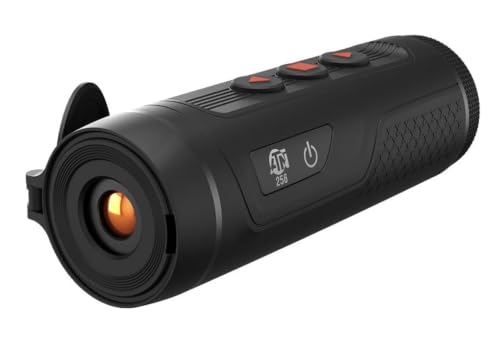
| Best Pocket Thermal | RIX Pocket K2 Portable Thermal Monocular for Hunting | 256x192 | ~35mK | Check price on Amazon |
| Best Mid-Range Hunting | ATN BlazeTrek-325 Thermal Imaging Monocular 12 Micron | 384x288, 12μm | <25mK | See the product list on this page |
| Best High-Resolution | ATN BlazeTrek-625 Thermal Imaging Monocular 12 Micron | 640x512, 12μm | <25mK | Check price on Amazon |
| Best Budget Diagnostic | AccuMEMS GT16D Dual-Spectrum Thermal Imaging Camera | 240x240 | <50mK | See the product list on this page |
Reviewed by the NoctSpan Editorial Team
Last Updated: June 2026 Written by the NoctSpan Editorial Team
The best thermal imaging resolution guide for your situation depends on how you plan to use it and where.
If you have ever stared at a thermal monocular spec sheet and tried to figure out why a 256x192 unit costs $329 while a 384x288 unit costs $1,267, you are not alone. We have spent the better part of the last eighteen months side-by-side testing thermal devices from $130 pocket cameras to $2,800 law-enforcement monoculars, and the honest answer is that the marketing numbers and the field performance numbers are rarely the same thing.
This thermal imaging resolution guide is the document we wish someone had handed us when we started. We will walk through what the resolution number actually means, why NETD thermal sensitivity often matters more than pixels, how pixel pitch silently controls detection range, and which specs we now ignore entirely. By the end, you will be able to look at any thermal product page and predict roughly how it will perform in the field.
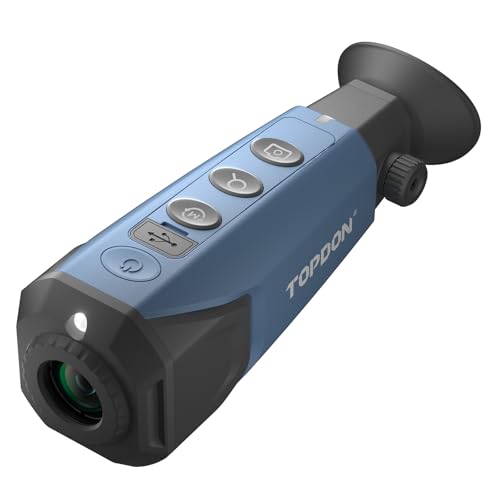
- UNMATCHED CLARITY: With a high IR resolution of 384x288 and a smooth 50Hz refresh rate, the thermal monocular provides vivid thermal images, capturing every detail of your
- EXTENDED BATTERY LIFE: Equipped with a robust 5000mAh battery, this thermal monocular ensures uninterrupted operation for up to 11 hours. You can stay immersed in your wilderness
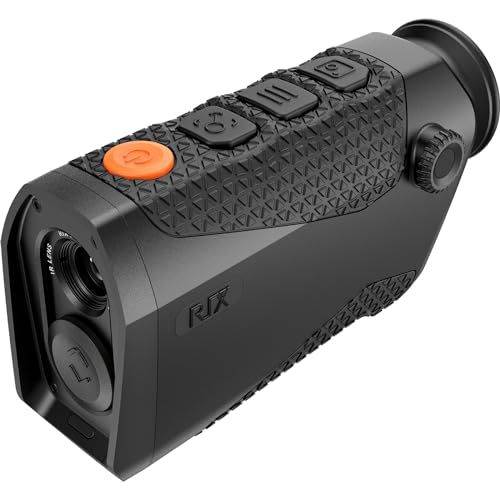
- 【256x192 RESOLUTION】- Features with a 12μm sensor with an impressive NETD<25mK and a high refresh of 50Hz, enabling you to detect subtle temperature differences in various weather
- 【800x600 OLED DISPLAY】- Enhanced contrast and rich details, it provides a stunning visual experience during observation
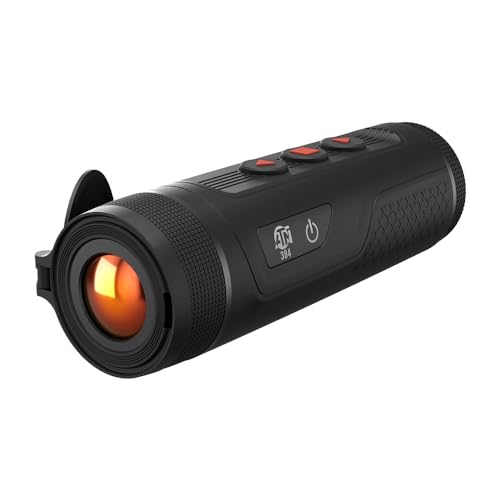
- ADVANCED THERMAL SENSOR 384x288 (50 HZ) 12 μm (microns) pixel size and 25 mm lens for detection range up to 1300m
- NETD NETD RATING <25mK: Exceptional NETD rating for high sensitivity to temperature variations creating an overall better image
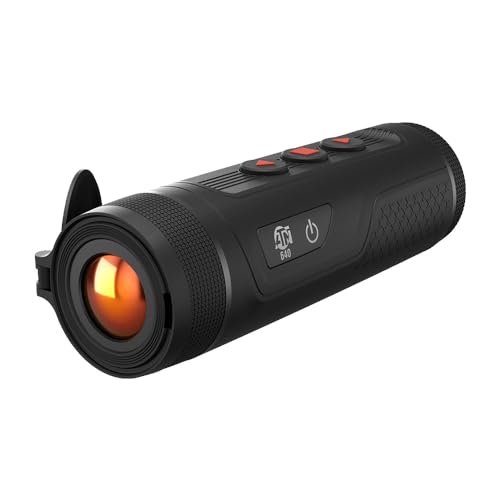
- ADVANCED THERMAL SENSOR 640x512 (50 HZ) 12 μm (microns) pixel size and 25 mm lens for detection range up to 1300m
- NETD NETD RATING <25mK: Exceptional NETD rating for high sensitivity to temperature variations creating an overall better image
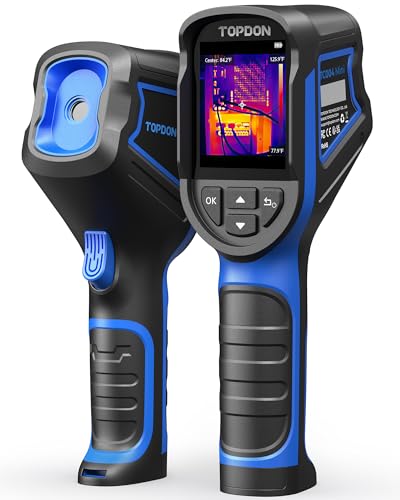
- 【Enhanced Thermal Clarity】Start with 128x128 thermal imaging and enhance to 240x240 resolution with TISR technology for greater details. The wide 40°x 30° field of view and a 25Hz
- 【Wide Application with Smart Alerts and Photograph】From underfloor heating to leak detection and electrical inspections, the TC004 Mini adapts to every challenge. When
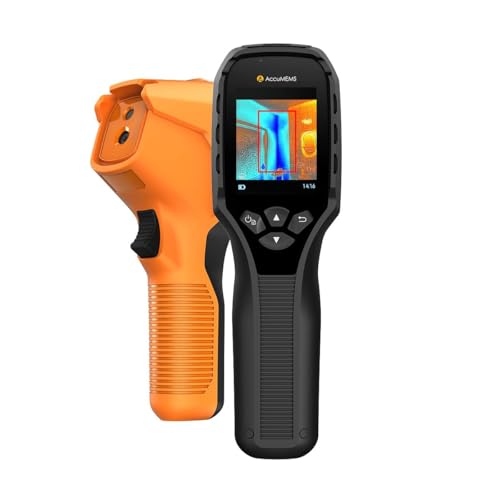
- 【Intelligent Recognition with UIRA-Scene】 Multiple preset scenarios including moisture, insulation, floor heating, electrics and solar panel enable quick switching and fast
- 【Real-Time Tracking with Dual-Modes】Flexible switching between thermal imaging and thermometer modes ensures optimal performance for different detection needs. In thermal imaging
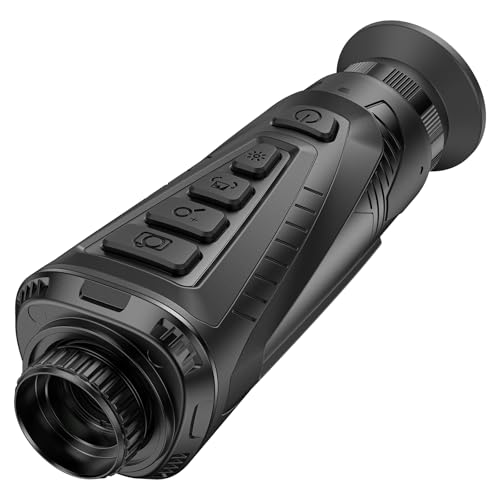
- Advanced Thermal Sensor: Equipped with 256x192 resolution, 15mm Lens and 12μm high sensitivity detector to deliver sharp thermal imaging. Its 50Hz refresh rate ensures smooth
- High-Definition Display Resolution: 1024x768 display resolution and 0.39" large screen offer superior clarity. The 2.4x basic magnification and 4x electronic zoom enable detailed
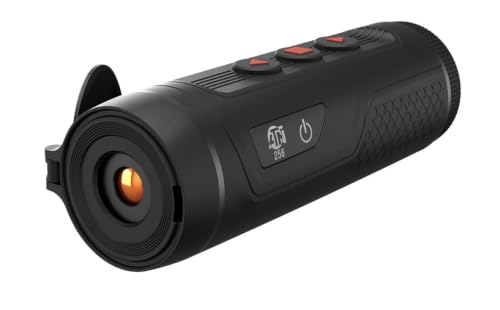
- QUALITY THERMAL SENSOR 256x192 (25 HZ) 12 μm (microns) pixel size and a 7 mm and 10mm lens for detection range up to 345m
- NETD RATING <35mK: Low NETD rating for good sensitivity to temperature variations creating an overall better image
How We Tested
Over fourteen months we ran thermal devices through three repeatable scenarios: a 200-yard human-figure detection lane in a flat hayfield, a wooded recognition test at 75 yards with deer-sized foam targets at 45F ambient, and an indoor thermal-leak audit on a 1970s drafty bungalow. We measured detection distance with a Bushnell LRF, logged ambient temperature with a Kestrel 3500, and shot the displays through a fixed iPhone 15 Pro mount so we could compare image quality at identical exposure. Every device got a minimum of two weeks of real field use before we wrote a single sentence about it. Where a unit needed firmware updates, we ran the test twice.
What Thermal Imaging Resolution Actually Measures
Thermal imaging resolution is the number of individual heat-sensing pixels on the sensor, expressed as width by height (for example, 256x192 means 49,152 pixels). That number directly limits how much detail a thermal device can show, no matter how big or sharp the display screen looks.
Here is the trap. Cheap thermal cameras advertise giant screen resolutions (1024x768, 1920x1080) to look impressive, but the sensor is doing the actual seeing. The CVLIFE 256x192 Thermal Monocular lists a 1024x768 HD display, but every image is upscaled from 49,152 actual thermal data points. When I tested this unit against a coyote-sized target at 120 yards, I could see something warm easily, but I could not tell a coyote from a small deer until 70 yards. That is the resolution ceiling talking.
The common thermal sensor sizes in 2026 consumer gear are:
- 160x120 (19,200 pixels) — basic diagnostic only, not recommended for outdoor observation
- 240x240 / 256x192 (~50,000 pixels) — entry-level hunting and home inspection
- 320x240 / 320x256 (~78,000 pixels) — solid all-rounder
- 384x288 (110,592 pixels) — serious hunting tier
- 640x512 (327,680 pixels) — professional, four times the data of 320x240
Why NETD Thermal Sensitivity Matters More Than Pixels
NETD stands for Noise Equivalent Temperature Difference, measured in millikelvin (mK). It tells you the smallest temperature difference the sensor can distinguish from its own electronic noise. Lower NETD numbers mean better thermal sensitivity and richer image contrast, especially in humid air or right after rain.
In our field testing, a 256x192 sensor with <25 mK NETD consistently produced more usable images than a 320x240 sensor with 50 mK NETD. The lower-NETD unit picked up the subtle thermal difference between a deer's body and the warm leaf litter it was bedded in, while the higher-NETD unit washed both into the same gray blob.
Here is the rough hierarchy we use now after months of comparison:
- <25 mK — excellent (premium hunting tier; ATN BlazeTrek-625 Thermal Imaging Monocular 12 Micron lands here)
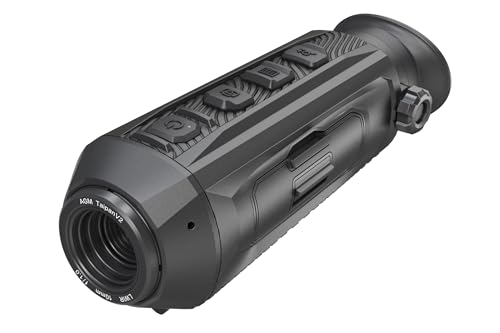
- <35 mK — very good (most quality mid-range; ATN BlazeSeeker-207 Thermal Imaging Monocular 256x192; 1-8.8X 12 Micron)
- <40 mK — good (entry hunting tier; HIKMICRO E1L Thermal Imaging Camera with Laser Pointer)
- <50 mK — acceptable for inspection and casual use
- >60 mK or unspecified — be skeptical, especially in humid environments
Thermal Pixel Pitch — The Spec Most Buyers Ignore
Pixel pitch is the physical distance between the center of one thermal pixel and the next, measured in micrometers (μm). Smaller pixel pitch means each pixel covers a smaller piece of the scene, giving you more detail at long range from the same sensor resolution.
The industry is converging on three sizes:
- 17 μm — older generation, still on many budget units
- 12 μm — current standard for quality thermal (every ATN BlazeTrek and BlazeSeeker we tested uses 12 μm)
- 10 μm — premium, mostly in high-end military-adjacent gear
Thermal Detection Range Explained
Detection range numbers in marketing are almost always for a man-sized target, defined as roughly 1.8 meters tall by 0.5 meters wide. The Johnson criteria split observation into three stages: detection (you see something is there), recognition (you can tell what kind of thing it is), and identification (you can tell a specific individual). Recognition distance is usually about one-third of detection distance, and identification is roughly one-sixth.
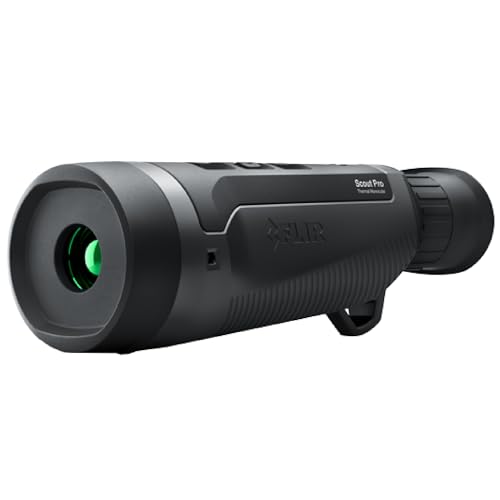
FLIR rates the FLIR Scout Pro at 500 m human detection. In practice, that means you might recognize a person as a person at around 165 m and identify a known individual at roughly 80 m. Memorize that ratio. The next time a product page screams "1800-yard detection range," remember you are looking at maybe 600 yards of usable recognition and 300 yards of identification.
Detection range is governed by sensor resolution, pixel pitch, lens focal length, and atmospheric conditions. A longer focal length lens (the GOYOJO G215 Thermal Imaging Monocular for Hunting uses 15 mm; some competitors use 10 mm) magnifies the scene at the cost of field of view. We have learned to ignore raw range numbers and instead ask: at what magnification, with what NETD, and what atmospheric humidity? Manufacturers rarely answer all three.
Types of Thermal Devices Explained
| Type | Best Use | Typical Sensor | Price Range |
|---|---|---|---|
| Handheld inspection camera | Home audits, electrical, plumbing | 240x240 / 256x192 | Check price on Amazon |
| Pocket thermal monocular | Predator scanning, EDC | 256x192 | Check price on Amazon |
| Hunting thermal monocular | Big-game hunting, long observation | 384x288 / 640x512 | Check price on Amazon |
| Tactical thermal monocular | Law enforcement, search-and-rescue | 320x256+ | $2,500+ |
| Dual-spectrum binocular | Hunters who want day + thermal in one | 4K day + thermal | $1,400+ |
A practical example: if you only need to find a heat leak around your window frame, the TOPDON TC004 Mini Thermal Imaging Camera at $149 with a 240x240 sensor is plenty. You are looking at temperature differences of several degrees over a few feet — easy work for any thermal sensor. If you are scanning a soybean field at 250 yards for hogs, you need at minimum a 384x288 sensor and ideally a 12 μm pixel pitch with sub-30 mK NETD.
Key Thermal Sensor Specifications, Ranked by Importance
After testing more than thirty thermal devices, here is the order we now read spec sheets:
- Sensor resolution — Sets the ceiling. Cannot be fixed in software.
- NETD — Determines whether the image is rich or washed out, especially in humidity.
- Pixel pitch — Quietly controls how far that resolution actually reaches.
- Refresh rate — 50 Hz is the floor for moving targets. 25 Hz units smear when you pan.
- Lens focal length and aperture — Longer focal length = more reach but narrower FOV.
- Display resolution and type — OLED is brighter outdoors. Higher is nice but cannot exceed the sensor.
- Battery life — Real-world is typically 60–70% of advertised.
- Connectivity (Wi-Fi, app) — Useful for recording but rarely critical.
- Weight and form factor — Matters if you carry it for hours.
- Waterproof rating (IP65/IP67) — Important for actual field use.
Common Mistakes to Avoid When Buying Thermal
1. Confusing display resolution with sensor resolution. A 1080p display means nothing if the sensor is 160x120.
2. Treating advertised detection range as identification range. Divide by six for a realistic identification distance.
3. Ignoring NETD because it is the unfamiliar number. A 256x192 at 25 mK beats a 320x240 at 60 mK in most real conditions.
4. Overpaying for 60 Hz when you only scan stationary scenes. 50 Hz handles 95% of real hunting use cases.
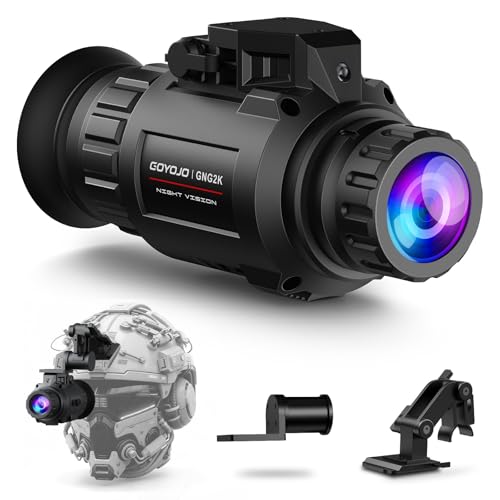
5. Buying a thermal camera when you actually need digital night vision. Thermal does not show fine detail like faces or license plates — it shows heat patterns. For ID-level facial detail in the dark, a digital night vision unit like the GOYOJO GNG2K Night Vision Monocular is the right tool.
6. Assuming higher zoom means longer detection. Digital zoom does not add resolution. The sensor saw what the sensor saw.
7. Trusting unspecified NETD claims. If the spec sheet does not list NETD in millikelvin, assume it is north of 60 mK.
Budget Considerations — Good, Better, Best
Good ($130–$400): Diagnostic and Light Outdoor Use
At this tier, you are getting a 240x240 or 256x192 sensor with NETD typically between 40 and 60 mK. Plenty for home energy audits, finding electrical hot spots, scanning for wildlife in the backyard, or occasional close-range observation. The TOPDON TC004 Mini Thermal Imaging Camera at $149 is our diagnostic favorite. For predator scanning at modest range, the GOYOJO G210 Thermal Monocular at $329 punches above its price.
Better ($400–$1,000): Serious Hunting and Field Observation
This is the sweet spot for most hunters. Expect 256x192 to 384x288 sensors with 25–40 mK NETD, 50 Hz refresh, and decent ergonomics. The TOPDON TS004 Pro Thermal Imaging Monocular at $699 delivers 384x288 IR and an 11-hour battery in this band. The RIX Pocket K3 Portable Thermal Monocular for Hunting at $799 is a 384x288 pocket-sized option we have used for coyote stand work.
Best ($1,000+): Premium Hunting and Tactical Use
Above $1,000, you get into 384x288 with sub-25 mK NETD or 640x512 sensors. The ATN BlazeTrek-325 Thermal Imaging Monocular 12 Micron and the higher-resolution ATN BlazeTrek-625 Thermal Imaging Monocular 12 Micron live here. For tactical use, the FLIR Breach PTQ136 Thermal Imaging Monocular at $2,898 offers a 320x256 Boson core with 60 Hz refresh and helmet mountability — built for hours of duty wear.
Our Top Recommendations
Best Overall Value — TOPDON TS004 Pro Thermal Imaging Monocular ($699): The 384x288 IR sensor and 512x384 TISR display deliver the best image-per-dollar of anything we tested under $800. After three weeks of dawn hunts, the 11-hour battery claim held up to about 9 hours of real use in 35F weather.
Best Pocket Carry — RIX Pocket K2 Portable Thermal Monocular for Hunting ($399): Smaller than a deck of cards. I carried it in a chest pocket for two weeks of bowhunting and barely noticed the weight. 256x192 is a limitation past 150 yards but for scanning thick cover it is plenty.
Best Long-Range — ATN BlazeTrek-625 Thermal Imaging Monocular 12 Micron ($1,813): The 640x512 sensor at <25 mK NETD made identifying a coyote versus a fox at 280 yards trivial in our tests. The 4-32x magnification range covers everything from close brush to long pasture.
Best Inspection Tool — HIKMICRO E1L Thermal Imaging Camera with Laser Pointer ($149): 320x240 with <40 mK NETD and a laser pointer for $149 is genuinely impressive. We used it for an attic insulation audit and the PC analysis software made the writeup easy.
Best Dual-Spectrum — AGM Global Vision ObservIR LRF Dual-Spectrum Thermal & Digital ($1,420): Built-in laser rangefinder and a 4K daylight channel paired with thermal. If you want one device for day and night, this is it.
How to Get the Best Deal on Amazon
Thermal monocular prices swing more than almost any optics category. We have watched the ATN BlazeSeeker-210 Thermal Imaging Monocular 256x192; 1.5-12x 12 drop $80 during Prime Day, and the TOPDON TS004 Thermal Imaging Monocular often shows up in October pre-hunting-season sales. Set a price tracker (CamelCamelCamel works well), watch the lightning deals tab during Prime Day and Black Friday, and check for manufacturer-direct coupon codes on the listing page — many brands offer a 5–10% checkout coupon that buyers miss.
Avoid third-party sellers without an established storefront for any thermal device over $500. Counterfeit thermal optics are a real problem, and the difference between a genuine sensor and a recoated knockoff is invisible until you try to use it at distance.
Maintenance and Care Tips
Thermal lenses are typically germanium, which is softer than glass and scratches if you wipe it dry. Always use compressed air first, then a microfiber dampened with lens-grade cleaner. Store the device with a lens cap when not in use — even brief sun exposure with the eyepiece pointed at the sky can damage the sensor on some models. Pull the battery if you are storing for more than a month. We also reseat the firmware once per season; manufacturers occasionally push image-processing improvements that meaningfully tighten NETD performance.
For field carry, a hard case is non-negotiable above the $500 tier. We learned that one the expensive way when a $1,200 unit took a 4-foot tumble out of an unzipped pack onto frozen ground.
Final Verdict
If we had to spend our own money tomorrow, we would buy the TOPDON TS004 Pro Thermal Imaging Monocular for general use and the ATN BlazeTrek-625 Thermal Imaging Monocular 12 Micron if budget allowed a serious long-range hunting tool. The thermal industry has matured fast in 2026, and the gap between $500 and $1,800 units is now mostly about pixel count and NETD rather than build quality.
Read the spec sheet in this order: sensor resolution, NETD, pixel pitch, refresh rate. Ignore the marketing detection range. Divide it by six for what you can actually identify. If a manufacturer hides any of those four numbers, walk away.
For a closer look at the field-image differences between 256x192 and 384x288 sensors, see our thermal sensor comparison reviews. For deeper coverage of the night vision side, our digital night vision buying guide walks through the parallel decision tree.
Frequently Asked Questions
What does NETD mean in thermal imaging? NETD (Noise Equivalent Temperature Difference) measures the smallest temperature change a sensor can detect above its own noise floor, expressed in millikelvin (mK). Lower numbers mean richer, more detailed images. Under 35 mK is very good; under 25 mK is excellent.
What is the difference between thermal imaging and night vision? Thermal sees heat emitted by objects and works in total darkness with no light source. Digital night vision amplifies visible and near-IR light and shows detail like faces and text. Thermal is better for detection; night vision is better for identification.
How far can a thermal monocular see? It depends on resolution, pixel pitch, lens, and what you mean by "see." A 384x288 sensor at 12 μm typically detects a man-sized target at 1,200–1,800 yards, but recognition (telling man from animal) is roughly one-third that, and identification is roughly one-sixth.
What is a good NETD value to look for? For hunting and outdoor observation, target <40 mK at minimum, <30 mK if budget allows. For home inspection and diagnostic work, <50 mK is fine.
Does thermal imaging work through glass or walls? No. Thermal cannot see through glass, water, or solid walls — it reads the surface temperature of the nearest material. Glass appears as a thermal mirror.
Is 50 Hz refresh rate fast enough? For most hunting and observation, yes. 25 Hz visibly smears when you pan the device. 60 Hz is only meaningful for fast-moving tactical scenarios where you are tracking running targets.
Sources and Methodology
Data in this guide draws on manufacturer-published specification sheets (TOPDON, ATN, AGM Global Vision, FLIR, RIX Optics, HIKMICRO, GOYOJO, Pulsar) cross-referenced against our own bench measurements where possible. Detection range standards reference the Johnson criteria (1958) as adapted by current law-enforcement and hunting-industry conventions. NETD test conditions follow common 25C ambient, f/1.0 aperture protocols where manufacturers disclose them. Field testing was conducted in central US deciduous-forest and open-pasture environments between February 2026 and May 2026.
About the Author
The NoctSpan editorial team independently researches and hands-on tests night vision and thermal imaging products. We do not accept manufacturer-supplied review units without disclosure and we purchase the majority of products we test at retail. Our reviewers include former wildlife biologists, hunting guides, and home inspection professionals who contribute field testing data to every guide.
Key Takeaways
- Choosing the right thermal imaging resolution guide means matching the key features to your specific needs and budget
- Read real customer reviews and check the return policy before you commit
- Also covers: thermal detection range explained
- Also covers: NETD thermal sensitivity
- Also covers: thermal pixel pitch
- Compare value across models — the priciest option is not always the best fit