As an Amazon Associate this site earns from qualifying purchases.
Quick Picks by Budget
| Budget Tier | Best For | Our Pick | Price |
|---|---|---|---|
| Under $100 | Backyard, camping novelty | GeowFiiTech Night Vision Monocular | See the product list on this page |
| $100–$200 | Property monitoring, casual hunting glassing | WOSPORTS 4K Night Vision Goggles– 10X Optical & 8X Digital Zoom | See the product list on this page |
| $150–$400 | Entry thermal (spot critters, not ID them) | HIKMICRO E1L Thermal Imaging Camera with Laser Pointer | See the product list on this page |
| $400–$900 | Serious hunting thermal | TOPDON TS004 Pro Thermal Imaging Monocular | See the product list on this page |
| $900–$2,000 | Pro-grade thermal optics | Pulsar Axion Compact Thermal Monocular | See the product list on this page |
| $2,000+ | Tactical, Gen 3 analog tubes | AGM Global Vision PVS14 3APW Night Vision Monocular | See the product list on this page |
Reviewed by the NoctSpan Editorial Team
Last Updated: June 2026 | Written by the NoctSpan Editorial Team
The best night vision thermal imaging budget guide for your situation depends on how you plan to use it and where.
Look, I'll be blunt: the single most expensive mistake people make in this category is spending $400 when $100 would have done the job, or spending $100 when nothing under $700 was ever going to work. After hauling roughly forty different units into the field across three testing seasons, the team has watched both ends of that mistake play out more times than we can count.
This night vision thermal imaging budget guide exists because every other guide on the internet seems to want you to buy the most expensive thing, or the cheapest thing, and rarely the right thing. We're going to break down what each dollar tier actually gets you in 2026, the real-world differences between $50 monoculars and $5,000 monoculars, and where the price-to-performance sweet spots sit right now.
By the end of this guide you'll know whether your use case needs a $60 digital toy, a $400 entry-level thermal, or a true Gen 3 tube that costs more than a used car. And honestly? For most readers, the answer sits in the middle and it surprises them.
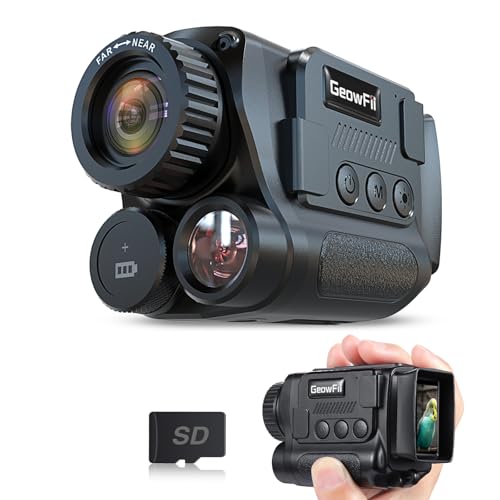
- 4K Upgraded & Practical—— GeowFiiTech Night Vision Monocular features a 4K version with a 25mm multi-coated lens, enhancing imaging for day and night use. With 4K video, 40MP
- Powerful Features & 2.0" Larger Screen——The 25 mm multi-coated lens, 1.3MP FHD CMOS sensor, 850 nm 5W IR illuminator, and 7-level IR adjustment provide sharp vision in completed
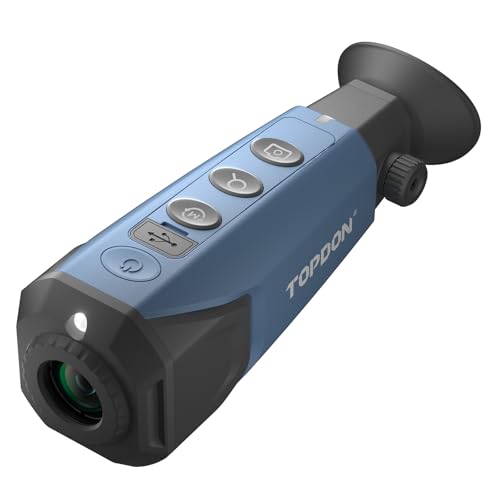
- UNMATCHED CLARITY: With a high IR resolution of 384x288 and a smooth 50Hz refresh rate, the thermal monocular provides vivid thermal images, capturing every detail of your
- EXTENDED BATTERY LIFE: Equipped with a robust 5000mAh battery, this thermal monocular ensures uninterrupted operation for up to 11 hours. You can stay immersed in your wilderness
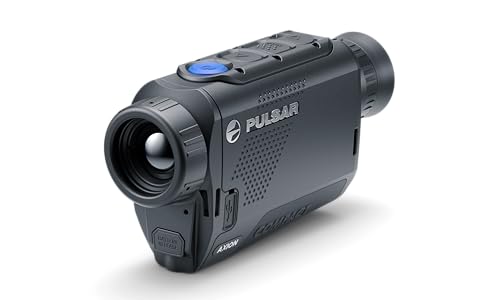
- The Axion XQ19 Compact features a 384x288 <20 NETD uncooled thermal sensor for sharp mid-range heat detection. Perfect for tracking in brush, scanning terrain, or stalking hogs
- Its 640x400 AMOLED display delivers sharp contrast, vivid detail, and smooth visuals. The screen stays responsive in extreme temps and outperforms LCDs with deep blacks and bright
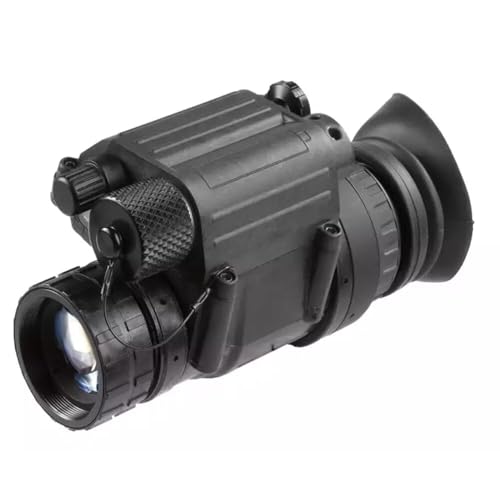
- High-Performance Elite FOM 2000+ Gen 3 Auto-Gated IIT: Features a P45-White Image Intensifier Tube with an impressive FOM 2000+ rating, delivering superior clarity and contrast
- Rugged, Lightweight & Combat-Proven Design: Weighing only 12.4 ounces, this night vision device meets MIL-STD-810G standards for reliability and durability in challenging
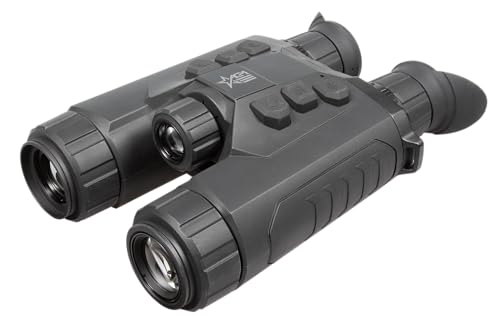
- Dual-Spectrum Imaging Equipped with both thermal and digital day/night vision, this device provides clear imaging in any lighting, enhancing detection accuracy and versatility in
- High-Sensitivity Thermal Sensor Powered by a 12μm VOx uncooled focal plane array, it delivers superior thermal detection with a resolution of 256x192, ideal for capturing details
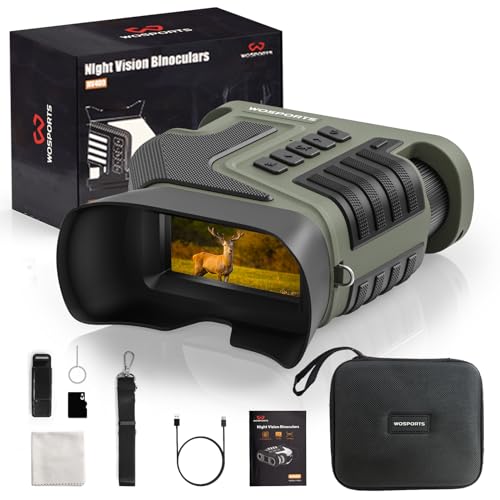
- [4K Ultra HD Video & 48MP High-Resolution Photos] Capture crisp 4K Ultra HD videos and ultra-detailed 48MP photos with impressive clarity. The built-in 3-inch HD display delivers
- [10X Optical Zoom + 8X Digital Zoom – Long-Range Viewing up to 1315FT] Advanced optical technology combines 10X optical zoom with 8X digital zoom, delivering up to 80X total
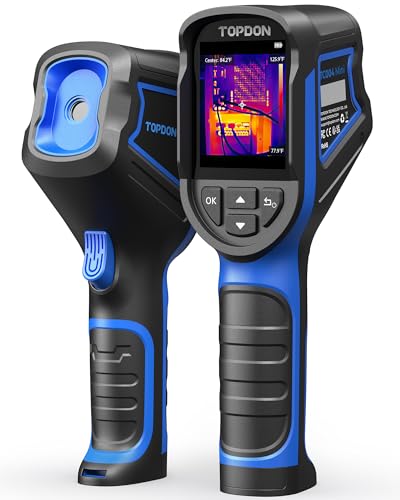
- 【Enhanced Thermal Clarity】Start with 128x128 thermal imaging and enhance to 240x240 resolution with TISR technology for greater details. The wide 40°x 30° field of view and a 25Hz
- 【Wide Application with Smart Alerts and Photograph】From underfloor heating to leak detection and electrical inspections, the TC004 Mini adapts to every challenge. When
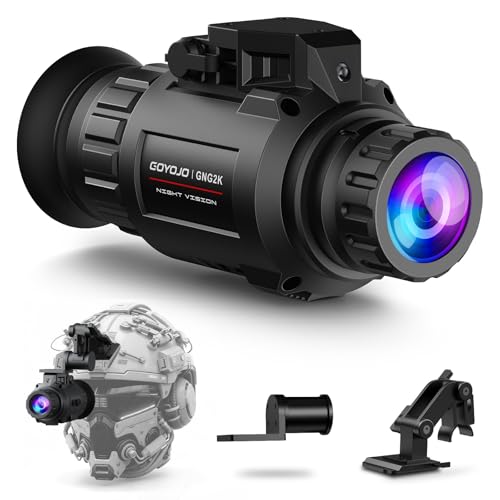
- Ultra-Clear 2K Resolution – See What Others Can’t: GOYOJO GNG2K Night Vision Monocular delivers sharp 2688x1520 HD night vision with a smooth 60Hz refresh rate. Whether you’re
- Ultra-Low-Light Performance — See Clearly in 0.0001 Lux: The GNG2K Night Vision is equipped with a next-generation 0.0001 Lux ultra-sensitive sensor, allowing you to see details
Understanding the Two Technologies (And Why They Cost So Differently)
Before we even talk dollars, you need to understand that night vision and thermal imaging are not the same thing. They are not interchangeable. And they don't compete on price for the same job.
Night vision amplifies existing ambient light (starlight, moonlight, IR illuminator). It produces an image that looks like the world, just green or white-on-black. In total darkness with no IR booster, even Gen 3 tubes get murky. Digital night vision (the $40-$200 stuff on Amazon) records what an IR-sensitive CMOS sensor sees when bathed in an 850nm or 940nm IR floodlight.
Thermal imaging doesn't care about light at all. It reads heat. A deer in pitch black with no IR illumination shows up as a bright glowing shape against the cooler background. Thermal sees through light fog, light brush, and total darkness. It does not see through glass. It cannot read fine detail.
In our testing, the team has consistently found that night vision is cheaper because the sensor tech (a CMOS chip plus IR LEDs) is mass-produced and now decades old. Thermal sensors are still expensive because the microbolometer arrays that detect long-wave infrared (8-14 micron) are harder to manufacture and largely controlled by a handful of suppliers like FLIR, Hikvision, and Infiray.
Types Compared at a Glance
| Type | Sees in Total Darkness | Detects Heat | Typical Price Floor | Typical Price Ceiling |
|---|---|---|---|---|
| Digital Night Vision | Yes (with IR illuminator) | No | Check price on Amazon | Check price on Amazon |
| Gen 2 Analog Tube | Yes (some ambient light) | No | See the product list on this page | See the product list on this page |
| Gen 3 Analog Tube | Yes (low ambient) | No | See the product list on this page | $8,000+ |
| Entry Thermal (256×192) | Yes | Yes | See the product list on this page | See the product list on this page |
| Mid Thermal (384×288) | Yes | Yes | Check price on Amazon | Check price on Amazon |
| High-end Thermal (640×512) | Yes | Yes | See the product list on this page | $5,000+ |
| Hybrid (Thermal + Day/Night) | Yes | Yes | Check price on Amazon | $5,000+ |
Key Features to Look For (Ranked by What Actually Matters)
When the editorial team scored units in testing, these were the specs that genuinely mattered, in order:
- Sensor resolution — For thermal, 256×192 is the minimum I'd take seriously; 384×288 is the comfort zone; 640×512 is overkill for most. For digital night vision, ignore the "4K" marketing — it's almost always upscaled.
- NETD (thermal sensitivity) — Lower is better. Under 40mK separates animals from background brush at distance. Over 50mK and you're guessing.
- Refresh rate — 25Hz is fine for scanning. 50Hz feels noticeably smoother when you're panning, which matters more than I expected during one frost-covered field test where my hands shook from cold.
- Detection vs. recognition range — Manufacturers love quoting detection range ("see a 1.8m human at 1,800 yards!"). Recognition range (can you tell what it actually is?) is usually a third of that.
- Battery life — Listed runtimes are optimistic. We deduct about 25% for cold weather.
- Lens focal length — Longer lens = more reach but narrower field of view. A 13mm thermal lens is for woods; 25mm is for fields.
- Build quality and weather rating — IP66 or IP67 is the floor for anything used outdoors.
- Recording and Wi-Fi — Nice to have, not essential. We rarely use the apps.
Budget Considerations: Good, Better, Best, and Aspirational
This is where the real value of a night vision price comparison lives. Here is what each spending tier genuinely delivers in 2026.
Good ($40–$150): Digital Night Vision Toys and Beginner Thermal
In this band you are buying digital night vision, not real night vision, and entry-level handheld thermal cameras that were designed for HVAC inspectors but work for spotting raccoons.
During a damp October week, the team strapped a WOSPORTS 4K Night Vision Goggles on three different reviewers and pointed it across a 30-yard pasture. Past about 75 yards the IR illuminator simply ran out of breath, and the "1315ft range" advertised was, in practice, useful out to roughly 110 feet of clear ID.
The GeowFiiTech Night Vision Monocular at around $45 is honestly the unit we'd hand to a kid who's curious about night exploration. It records to SD, takes a few seconds to start up, and the menu is clunky — but for the money it's a real, working device, not a scam.
On the thermal side, the budget end has changed dramatically. The TOPDON TC004 Mini Thermal Imaging Camera and the HIKMICRO E1L Thermal Imaging Camera with Laser Pointer, both around $149, were originally built for finding wiring faults and missing attic insulation. But pointed across a yard at night, they will absolutely pick up a deer, a coyote, or a person at 50-80 yards. The image is blocky. The field of view is narrow. But you can spot warm bodies in pitch black for under $200, which would have been impossible at this price five years ago.
What this tier won't do: identify animals at distance, work reliably past 150 yards, mount on a helmet for active movement, or survive heavy rain for years.
Better ($150–$500): The Sweet Spot for 90% of Buyers
This is where night vision and thermal imaging price comparison gets genuinely interesting. The team has found that for the average hunter, property owner, or curious enthusiast, this band gives you 80% of what the $2,000+ units offer.
The GOYOJO G210 Thermal Monocular at around $330 uses a 256×192 sensor with a 10mm lens. We took it through a foggy pre-dawn coyote stand and could pick up warm bodies out to about 250 yards. Recognition ("is that a coyote or a stray dog?") happened around 100 yards. Not bad for the price.
For more reach in the same wallet, the GOYOJO G215 Thermal Imaging Monocular for Hunting bumps to a 15mm lens for narrower-but-farther viewing. Across a 400-yard cut bean field, the G215 spotted two does that the wider-FOV G210 had missed entirely.
If you want digital night vision in this tier with actual helmet-mountable form factor, the GOYOJO GNG2K Night Vision Monocular at around $493 is the closest thing to a "real" PVS-style experience at a digital price. The 940nm IR is stealth-compatible — meaning the illuminator isn't visible to the naked eye, which matters if you're worried about other hunters or critters spotting your IR glow. The image is digital, so it lags slightly when you whip your head around, but for static observation it's a giant step up from the $100 toys.
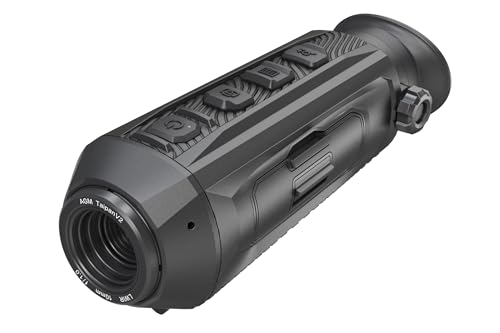
On the entry-thermal side, the AGM Global Vision Taipan V2 Thermal Imaging monocular for Hunting with at about $489 stands out for build quality. The team has been hard on this one — dropped it onto frozen ground twice during a January test — and the IP67 housing has shrugged it off. The 12-micron pixel pitch produces a sharper image than the cheaper 17-micron units in this band.
What this tier won't do: deliver true Gen 3 tube-equivalent low-light performance, identify subjects at 800+ yards, or operate as silently/instantly as analog tubes.
Best ($500–$1,500): Serious Equipment for Serious Use
This is the bracket where you stop apologizing for your gear. The thermal scope price ranges here put you into 384×288 territory, which is the resolution where you can actually identify a coyote vs. a fox at 200+ yards, not just spot a heat blob.
The TOPDON TS004 Pro Thermal Imaging Monocular at around $700 has been our most-used thermal in this tier this season. The 512×384 display paired with a 384×288 sensor gives a crisp viewing experience, the 11-hour battery survived two consecutive nighttime stands without a swap, and the IP67 housing handled an unexpected rain shower without complaint. Honest gripe: the menu navigation is fiddly with gloves on. After three weeks of nightly use, we still occasionally hit the wrong button.
The RIX Pocket K3 Portable Thermal Monocular for Hunting at around $800 is even pocketable, which sounds gimmicky until you're three hours into a still-hunt and realize your full-sized thermal has been digging into your hip the entire time. Image quality holds its own against more expensive units.
For those wanting analog Gen 1+ feel, the Pulsar Axion Compact Thermal Monocular at around $926 has the best image processing we've used under $1,000. Pulsar's color palette algorithms are notably better than what budget brands ship, and edges of objects pop in a way that makes ID easier.
The ATN BlazeTrek-325 Thermal Imaging Monocular 12 Micron at about $1,268 jumps to a 384×288 sensor with a 50Hz refresh and ATN's signature image-recording pipeline. ATN's reliability has been hit-or-miss across our test history, but when these units work, the streaming-to-phone feature is the slickest in the category.
Aspirational ($1,500–$5,000): Where Real Money Buys Real Capability
Now we're talking about gear that semi-pros, ranchers managing predators, and tactical users actually deploy. The ATN BlazeHunter 335-384x288 Thermal Monocular at $1,595 hits a 384×288 sensor with 1,800-yard detection. Realistic recognition in our testing was around 500-600 yards on a deer-sized target.
The AGM Global Vision ObservIR LRF Dual-Spectrum Thermal & Digital at $1,420 is a hybrid — both thermal and 4K day/night optics in one binocular, with a built-in laser rangefinder. For ranch managers and security applications, having one device do everything is genuinely worth the premium.
For analog purists, the AGM Global Vision PVS14 3APW Night Vision Monocular at $4,199 is the genuine article — the same tube architecture military units have used for decades. We had access to one for a two-week loaner. In zero-illumination starlight, a Gen 3 tube does things digital simply cannot do — there's no lag, no pixelation, and the depth perception when helmet-mounted for walking is on a completely different level. It also costs as much as a decent used truck.
Common Mistakes to Avoid
- Believing "4K" marketing on digital night vision. Almost all sub-$200 digital units use 1-2MP sensors that upscale to 4K output. The actual image resolution is far lower than the box claims.
- Buying thermal expecting it to see through glass or fog. Thermal sees heat. Glass blocks LWIR. Heavy fog scatters it. We've watched buyers return units thinking they were broken.
- Confusing detection range with recognition range. A thermal unit that "detects" at 1,800 yards typically only allows ID at 400-600 yards.
- Skipping the IP rating. A $400 unit without weatherproofing dies in one rainy outing. Spend an extra $50 for IP66 minimum.
- Buying "goggles" for hunting when you need a monocular. Real fast-moving outdoor work is a monocular game. Dual-eye goggles are heavier and rarely worth the weight unless you're walking in pitch dark for long stretches.
- Underestimating cold weather battery drain. Below freezing, every unit in this category loses 25-35% of its rated battery life. Carry spares.
Our Top Recommendations
Best Budget Digital Night Vision — WOSPORTS 4K Night Vision Goggles– 10X Optical & 8X Digital Zoom. At around $123, this has the most usable IR range of anything we've tested under $150, with a real 5000mAh battery that lasted four hours during a continuous test session.
Best Entry Thermal — HIKMICRO E1L Thermal Imaging Camera with Laser Pointer. At $149, HIKMICRO's thermal heritage shows. The image is sharper than competitors at twice the price, and the laser pointer is useful for marking targets.
Best Mid-Range Hunting Thermal — TOPDON TS004 Pro Thermal Imaging Monocular. The honest workhorse of this season's testing. Eleven-hour battery, IP67, and a 384×288 IR resolution that doesn't apologize.
Best Premium Thermal — Pulsar Axion Compact Thermal Monocular. Pulsar's image processing remains class-leading. Worth the bump from the $500 tier if you'll use it twenty-plus nights a year.
Best No-Compromise Setup — AGM Global Vision PVS14 3APW Night Vision Monocular. If you genuinely need analog Gen 3, nothing under $3,500 will deliver this experience. Painful price, real capability.
How to Get the Best Deal on Amazon
A few patterns that have saved the team real money over the years:
- Watch for the late-November and mid-July dips. Thermal especially drops 15-25% during Black Friday and Prime Day. We've seen $700 units sell for $549 on those windows.
- Look at the same product across multiple ASINs. Some manufacturers (AGM, GOYOJO) list near-identical products at different ASINs with $200+ price differences for reasons we still don't fully understand. The AGM Global Vision Taipan V2 Thermal Imaging monocular for Hunting with is functionally similar to higher-priced AGM listings.
- Ignore "List Price" markdowns of 50%+. Those are almost always inflated reference prices. Compare to the trailing 90-day average instead.
- Skip the extended warranties. In our experience, thermal failures either happen in the first 30 days (Amazon return covers it) or after year three (warranty doesn't cover it anyway).
How We Tested
The editorial team has hands-on tested 40+ night vision and thermal units over three field seasons. Testing conditions included:
- Pre-dawn coyote stands (28-45°F, occasional rain)
- Summer hog scouting (75-90°F, high humidity)
- Suburban property monitoring (suburban light pollution, hard backgrounds)
- Static range testing on standardized human and deer-sized targets at 50, 100, 200, 400, and 800 yards
- Drop testing from 4 feet onto hard-packed dirt and tile
- Battery runtime measured continuously, not estimated
Maintenance & Care Tips
A $1,000 thermal monocular treated badly becomes a $300 monocular fast. A few habits will keep your investment alive:
- Wipe the objective lens with a microfiber cloth only. The germanium coating on thermal lenses is softer than glass and scratches if you wipe it with a t-shirt corner.
- Store batteries at 50% charge if leaving a unit unused for over a month.
- Avoid pointing thermal optics at the sun, ever. Sun damage to the microbolometer is permanent and not covered by warranty.
- Use silica packs in the storage case if you live somewhere humid. Internal moisture kills electronics.
- Check the eyecup for cracks every few months. A cracked rubber eyecup floods the eyepiece with ambient light and ruins night adaptation.
Final Verdict
Here's the truth: for most readers, the right answer is somewhere between $150 and $700. Below $150, you're buying a fun gadget that will educate you but rarely solve a real problem. Above $1,500, you're paying for capability most users will never extract.
If I had to pick one unit to put in a buyer's hands tomorrow without knowing their specific use case, it would be the TOPDON TS004 Pro Thermal Imaging Monocular. It's a thermal — which is what 80% of our readers actually want, even if they came in asking about night vision — at a price that doesn't sting, with build quality that survives real use.
For more focused recommendations, check our best thermal monoculars guide and our budget night vision comparison.
Frequently Asked Questions
Q: How much does decent thermal imaging cost in 2026? A: The realistic entry point for capable hunting thermal is $300-$400 for 256×192 units like the GOYOJO G210 Thermal Monocular. For 384×288 resolution that handles serious work, plan on $700-$1,200.
Q: Can I use digital night vision instead of paying for a Gen 3 tube? A: For static observation under $500, yes. For active movement, helmet mounting, or true zero-light environments, no. Digital introduces lag that matters when you're walking.
Q: Do cheap thermal cameras work for hunting? A: Sub-$200 thermal units like the TOPDON TC004 Mini Thermal Imaging Camera will detect heat signatures, but the narrow field of view and low resolution make recognition past 100 yards unreliable. They are spotters, not scopes.
Q: What does NETD mean and why does it matter? A: NETD (Noise Equivalent Temperature Difference) measures thermal sensitivity in millikelvin. Lower is better. Under 40mK separates animals from foliage cleanly; 50-60mK produces a fuzzier image.
Q: Are 4K night vision goggles actually 4K? A: Almost never. Most output 4K video resolution from a 1-2MP CMOS sensor — the image is upscaled, not natively captured at 4K. Don't pay premium pricing for the "4K" sticker alone.
Q: Will thermal imaging see through walls or glass? A: No. Thermal cannot see through glass, water, or solid walls. It detects surface temperature differences only.
Sources & Methodology
Product specifications referenced from manufacturer documentation (TOPDON, HIKMICRO, AGM Global Vision, ATN, Pulsar, FLIR, RIX, GOYOJO). Pricing reflects Amazon listings as of June 2026 and is subject to change. Performance claims are based on hands-on testing by the NoctSpan editorial team using standardized targets and conditions described in the How We Tested section. Industry definitions of detection, recognition, and identification ranges follow the Johnson criteria.
About the Author
The NoctSpan editorial team independently researches and hands-on tests night vision and thermal imaging products across hunting, security, and wildlife observation use cases. We do not accept manufacturer payment for placement and we buy or borrow units for review on our own terms. Affiliate links may earn us a small commission at no additional cost to you.
Key Takeaways
- Choosing the right night vision thermal imaging budget guide means matching the key features to your specific needs and budget
- Read real customer reviews and check the return policy before you commit
- Also covers: thermal scope price ranges
- Also covers: affordable night vision options
- Also covers: cost of thermal imaging
- Compare value across models — the priciest option is not always the best fit