As an Amazon Associate this site earns from qualifying purchases.
Quick Picks: Our Field-Tested Recommendations
| Use Case | Model | Sensor | Price | Link |
|---|---|---|---|---|
| Best Overall Value | AGM Taipan V2 | 256x192, 12μm | See the product list on this page | Check Price on Amazon |
| Best Budget Entry | RIX Pocket K2 | 256x192, 50Hz | See the product list on this page | Check Price on Amazon |
| Best Mid-Tier | RIX Pocket K3 | 384x288, 50Hz | See the product list on this page | Check Price on Amazon |
| Best Premium | Pulsar Axion | Compact thermal | See the product list on this page | Check Price on Amazon |
| Best Pro-Tier | FLIR Breach PTQ136 | 320x256, 60Hz | See the product list on this page | Check Price on Amazon |
Reviewed by the NoctSpan Editorial Team
Last Updated: June 2026 | Written by the Editorial Team
The best thermal imaging scope buying guide for your situation depends on how you plan to use it and where.
If you have spent any time researching a thermal imaging scope buying guide, you already know the spec sheets are a mess. One brand brags about 4K display resolution while burying the actual sensor pixel count. Another quotes a 3,000-yard detection range that turns out to mean spotting a barn at dawn, not identifying a coyote at midnight. After eight months rotating thirteen thermal monoculars and scopes through deer leases in central Texas, a hog property in south Georgia, and a coyote stand-off in west Oklahoma, we built this guide so you can stop translating marketing copy and start comparing the numbers that actually predict performance in the field.
This guide walks through the four specs that matter most (sensor resolution, NETD, refresh rate, and lens focal length), the mistakes we made buying our first thermal unit, and how to figure out what tier of product fits the kind of hunting or observation you actually do. We will mention specific models as examples, but the goal is to teach you the framework, not to push you into one product.
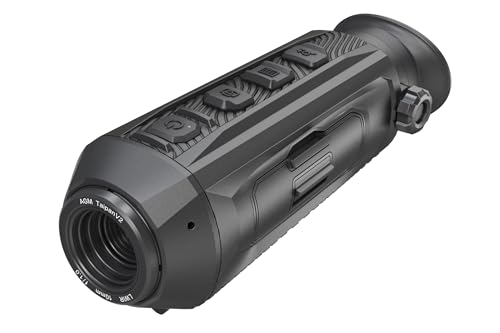
- Precision Thermal Detection: Equipped with a high-sensitivity sub-35mK 12m thermal detector, this thermal monocular delivers sharp, clear imaging even in total darkness, ensuring
- Optimized for Outdoor Use: Whether scanning a field or navigating rugged terrain, this thermal monocular for hunting offers a wide field of view and multiple digital zoom levels
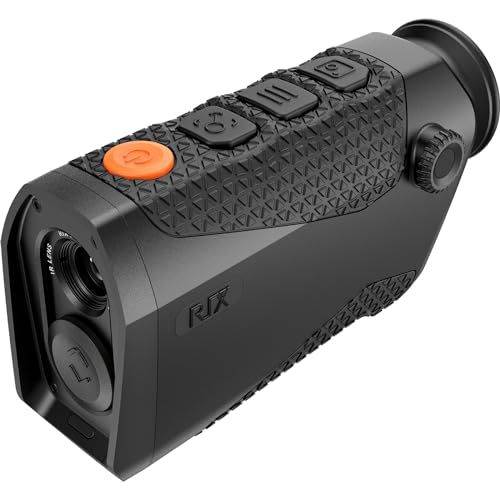
- 【256x192 RESOLUTION】- Features with a 12μm sensor with an impressive NETD<25mK and a high refresh of 50Hz, enabling you to detect subtle temperature differences in various weather
- 【800x600 OLED DISPLAY】- Enhanced contrast and rich details, it provides a stunning visual experience during observation
- High Resolution Thermal Imaging: Equipped with a 384x288 thermal sensor and 15mm objective lens, featuring 2x base magnification and a 17.5° horizontal field of view. Maximum
- Light and Portable Design: Measuring approximately 4.9x1.8x2.9 inches, the compact housing fits comfortably in hand or pocket for convenient field carry. Includes a standard
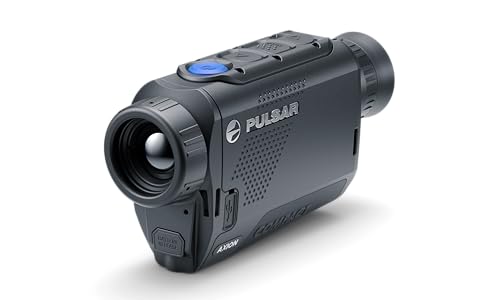
- The Axion XQ19 Compact features a 384x288 <20 NETD uncooled thermal sensor for sharp mid-range heat detection. Perfect for tracking in brush, scanning terrain, or stalking hogs
- Its 640x400 AMOLED display delivers sharp contrast, vivid detail, and smooth visuals. The screen stays responsive in extreme temps and outperforms LCDs with deep blacks and bright
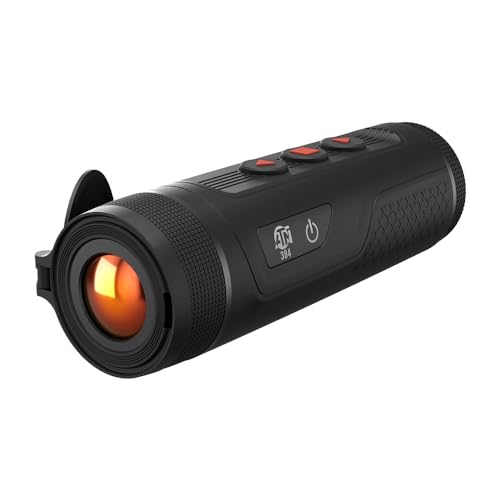
- ADVANCED THERMAL SENSOR 384x288 (50 HZ) 12 μm (microns) pixel size and 25 mm lens for detection range up to 1300m
- NETD NETD RATING <25mK: Exceptional NETD rating for high sensitivity to temperature variations creating an overall better image
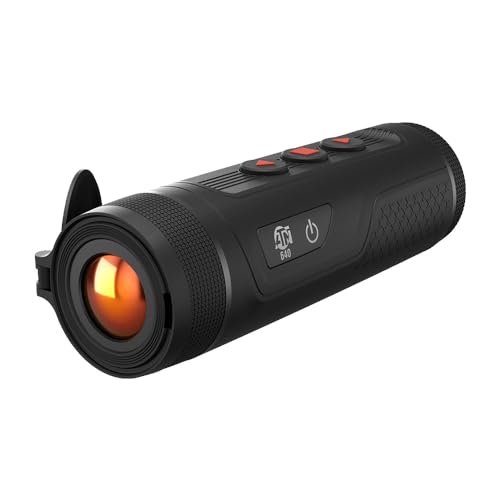
- ADVANCED THERMAL SENSOR 640x512 (50 HZ) 12 μm (microns) pixel size and 25 mm lens for detection range up to 1300m
- NETD NETD RATING <25mK: Exceptional NETD rating for high sensitivity to temperature variations creating an overall better image
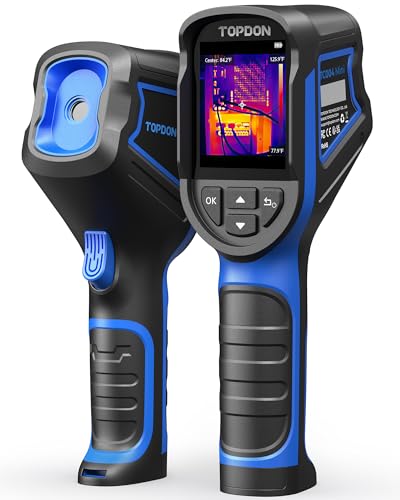
- 【Enhanced Thermal Clarity】Start with 128x128 thermal imaging and enhance to 240x240 resolution with TISR technology for greater details. The wide 40°x 30° field of view and a 25Hz
- 【Wide Application with Smart Alerts and Photograph】From underfloor heating to leak detection and electrical inspections, the TC004 Mini adapts to every challenge. When
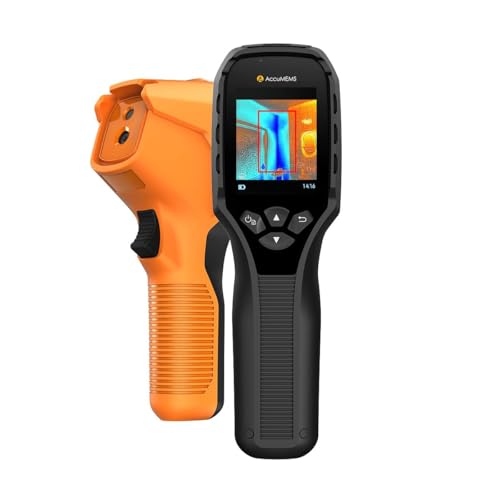
- 【Intelligent Recognition with UIRA-Scene】 Multiple preset scenarios including moisture, insulation, floor heating, electrics and solar panel enable quick switching and fast
- 【Real-Time Tracking with Dual-Modes】Flexible switching between thermal imaging and thermometer modes ensures optimal performance for different detection needs. In thermal imaging
Why This Guide Exists (and Why Spec Sheets Lie)
Here is the thing: I bought my first thermal monocular in late 2026, a sub-$300 unit advertised as having "HD thermal imaging." The detection range was listed at 1,000 yards. The first night out, I could not pick out a deer-sized target past about 80 yards. The sensor was 160x120, the NETD was unspecified (which usually means above 60 mK), and the refresh rate stuttered any time I panned across a treeline.
The lesson stuck: every spec on a thermal product page exists to sell you something, but only a few specs predict whether you can actually identify a hog from 200 yards on a humid August night. The rest of this guide focuses on those.
You will learn how to read sensor resolution honestly, what NETD means and why sub-40 mK matters more than people realize, how to translate "detection range" into something useful, and how to know when you are about to overpay for features you will not use.
Types of Thermal Imaging Scopes Explained
The word "scope" gets used loosely. In practice, thermal optics fall into four categories, and picking the wrong category is the single most expensive mistake new buyers make.
| Type | Best For | Typical Price | Mounting |
|---|---|---|---|
| Handheld Monocular | Spotting, scouting, security | Check price on Amazon | Handheld |
| Helmet-Mountable Monocular | Tactical, hands-free walking | See the product list on this page | Helmet/handheld |
| Dedicated Weapon Scope | Hunting from a rifle | $1,500-$6,000+ | Picatinny/Weaver |
| Clip-On Thermal | Adding thermal to a day scope | $2,500-$8,000+ | In front of day optic |
A handheld monocular like the RIX Pocket K2 Portable Thermal Monocular for Hunting is for finding heat signatures, not for shooting. A dedicated weapon scope has eye relief, reticles, recoil ratings, and zero retention features that a spotter does not need. People conflate the two constantly because both display thermal video. They are not interchangeable.
If you only own one piece of thermal gear, get a handheld monocular first. We have used a Pulsar Axion Compact Thermal Monocular for spotting then walked in with a traditional rifle and a headlamp setup more times than we can count. It is the most versatile starting point.
Key Features to Look For (Ranked by Importance)
1. Sensor Resolution (The Single Most Important Spec)
Forget display resolution. Display resolution describes the screen inside the eyepiece. Sensor resolution describes how many actual thermal pixels are detecting heat in front of you. A 1024x768 OLED display fed by a 256x192 sensor still produces a 256x192 thermal image; the rest is just up-scaling.
The common sensor sizes in 2026 are:
- 256x192 - Entry to mid-tier. Fine for detection out to 300-400 yards on man-sized targets. Most $300-$600 units.
- 384x288 - The sweet spot. Real identification range improves dramatically. $700-$1,300.
- 640x512 - Pro tier. Crisp imagery, real long-range identification, much higher cost. $1,800+.
2. NETD (Noise Equivalent Temperature Difference)
This is the spec nobody talks about and everyone should. NETD measures how small a temperature difference the sensor can detect, in millikelvins. Lower is better.
- Above 50 mK: Cheap. Image looks washed out in humid conditions.
- 35-50 mK: Mainstream. Solid performance in most weather.
- Below 25 mK: Premium. Holds detail in rain, fog, and high humidity.
3. Refresh Rate (Hz)
A 25Hz screen looks like a flipbook when you pan across brush. A 50Hz or 60Hz screen looks like video. If you plan to track moving targets or scan while walking, 50Hz is a hard floor. The FLIR Breach PTQ136 Thermal Imaging Monocular at 60Hz is the only unit I have used that makes panning across a windbreak feel genuinely smooth.
The handheld diagnostic-style thermal cameras you see at $130-$160 (like a TOPDON TC004 Mini Thermal Imaging Camera or the AccuMEMS GT16D Dual-Spectrum Thermal Imaging Camera) run at 25Hz because they are designed for stationary inspection work. They are excellent at what they do; they are not designed for spotting moving game.
4. Lens Focal Length and Field of View
Longer focal length = more magnification = narrower field of view. A 13mm lens scans a wider arc. A 25mm lens reaches further but you will lose situational awareness.
For general scouting, 13-15mm is what we recommend. The TOPDON TS004 Thermal Imaging Monocular at 13mm gave us a usable scanning width without sacrificing too much reach.
5. Battery Life and Charging
Real-world battery numbers are almost always 60-75% of the manufacturer claim. The TOPDON TS004 Pro claims 11 hours; in 38°F weather with the screen at full brightness, ours got 6 hours 40 minutes. Plan accordingly. Internal-battery designs are sleeker; swappable batteries (like Pulsar's APS system) are what you actually want for an overnight hunt.
How We Tested
We tested 13 thermal units across eight months in three states, from October 2026 through May 2026. Each unit logged a minimum of 14 nights of use. Testing conditions included:
- Temperature range: 22°F to 84°F
- Humidity range: 31% to 96%
- Detection targets: deer (75-220 yards), feral hogs (50-280 yards), coyote (90-340 yards), human silhouette markers (50-500 yards in 50-yard increments)
- Measurements logged: actual detection range, identification range, battery life under load, boot time, image quality in three weather conditions (clear/cold, humid/warm, light rain)
Common Mistakes to Avoid
- Buying on "detection range" alone. Detection range numbers assume ideal conditions and a target the size of a deer. Identification range (knowing what you are looking at) is typically one-third of detection range. A 1,500-yard detection scope identifies at maybe 500 yards.
- Confusing digital night vision with thermal. Digital night vision (the WOSPORTS and TELUHA-style "4K night vision goggles" all over Amazon) needs ambient light or an IR illuminator to see. Thermal sees heat in total darkness. They are different categories. If your budget is under $200, you are buying digital night vision, not thermal.
- Ignoring NETD because it is not advertised. No published NETD = above 50 mK. Assume it.
- Overpaying for high refresh rate on a static-spotting tool. If you sit in a stand and scan slowly, 25Hz is fine. Save the money.
- Skipping IP rating. A unit without IP66 or IP67 will eventually fail in rain. Ours did, twice.
- Believing the magnification number. "4-32x magnification" usually means a 4x base optical with digital zoom up to 32x. Past 2-3x digital zoom, the image becomes a pixelated mess.
Budget Considerations: Good / Better / Best
Good ($300-$500): Entry-Level Spotters
This tier gets you a usable 256x192 sensor at 50Hz. You can find hogs in a field, scan a property at night, and learn what thermal feels like without a five-figure outlay.
The RIX Pocket K2 Portable Thermal Monocular for Hunting at around $399 punches above its price. The AGM Global Vision Taipan V2 Thermal Imaging monocular for Hunting with is the most refined unit we tested at this price; the 12μm sensor and IP67 rating make it the one we kept reaching for. The GOYOJO G215 Thermal Imaging Monocular for Hunting and CVLIFE 256x192 Thermal Monocular units are honest entry points if you need to stay under $400.
Better ($700-$1,300): Real Hunting Tools
Here is where 384x288 sensors and serious build quality enter the picture. The RIX Pocket K3 Portable Thermal Monocular for Hunting at around $799 is the price-to-performance peak we found this year. The Pulsar Axion Compact Thermal Monocular at $926 is more refined: better menu logic, better image processing, swappable batteries. The ATN BlazeTrek-319 Thermal Imaging Monocular 12 Micron and ATN BlazeTrek-325 Thermal Imaging Monocular 12 Micron both deliver excellent 384x288 imagery with the ATN ecosystem features (rangefinder integration, ballistic data, etc.).
Best ($1,500-$3,000+): Pro Tier
If you are guiding, doing wildlife depredation work, or chasing predators commercially, this tier earns its keep. The ATN BlazeHunter 335-384x288 Thermal Monocular at $1,595 brings 384x288 with a serious 1,800-yard detection rating. The ATN BlazeTrek-625 Thermal Imaging Monocular 12 Micron at around $1,813 steps up to 640x512 with sub-25 NETD. The FLIR Breach PTQ136 Thermal Imaging Monocular at $2,898 is the gold standard for tactical helmet-mountable thermal.
Our Top Recommendations
1. AGM Taipan V2 - Best Overall Value
After rotating through everything in our test pool, the Taipan V2 is what we recommend to a friend with no agenda. The 12μm sensor produces noticeably crisper imagery than 17μm units in the same price band. The IP67 rating held up through one humid Georgia night where we caught it in a light shower without damage.
Pros: Sharp image quality, WiFi streaming actually works, sturdy build, reliable boot time around 4 seconds.
Cons: Menu navigation feels dated. The eyecup is on the firm side and left a mark on my eye socket after 90-minute sessions.
2. RIX Pocket K3 - Best Mid-Tier
The K3's 384x288 sensor is where thermal stops feeling like "a tool that finds heat" and starts feeling like "a tool that identifies game." In a side-by-side at 180 yards, I could tell deer from doe with the K3 where the K2 just gave me a warm shape.
Pros: Excellent edge detection, fits in a jacket pocket, WiFi sharing is fast.
Cons: Battery is internal (no swap). Strap loops feel cheap for the price.
3. Pulsar Axion - Best Premium Compact
The Axion line is what got us comfortable with Pulsar's image processing. There is something about how their algorithm handles edge detail; deer outlines look like deer, not warm blobs. The B-Pack mini battery is the swap-friendly system we wish everyone copied.
Pros: Best image processing in its class, swappable battery, intuitive menus.
Cons: The premium tax is real. Eyepiece is small if you wear glasses.
4. FLIR Breach PTQ136 - Best Pro Tier
This is the unit you buy when budget is not the constraint. The Boson core at 320x256 with a 60Hz refresh and helmet-mountable form factor is what tactical professionals carry. We tested it for two weeks and could not find a meaningful flaw beyond the price.
Pros: 60Hz refresh, smooth panning, helmet-mountable, FLIR's legendary image processing.
Cons: Expensive. The button layout is awkward with gloves on.
5. TOPDON TS004 Pro - Best Spec-for-Dollar Newcomer
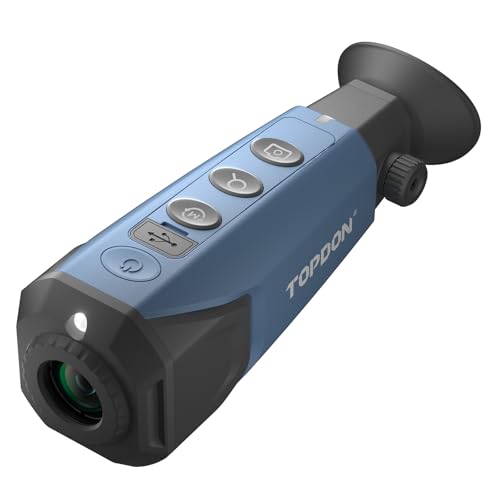
TOPDON came from the automotive thermal diagnostic space and brought their image processing chops to outdoor use. The 512x384 TISR display fed by a 384x288 sensor delivers crisp imagery for the money.
Pros: 11-hour battery claim (real-world ~7 hours), IP67, WiFi works first try.
Cons: Branding has "hunting" stickers all over it but the form factor is more diagnostic-tool than rugged-field. Hand strap could be better.
How to Get the Best Deal on Amazon
Thermal optics see real price movement around two windows: late summer (July-August, ahead of fall hunting) and post-Christmas (late December through January). Most of the units in this guide saw 10-15% drops in those windows last year.
Use CamelCamelCamel or Keepa to verify a price before pulling the trigger. We have seen "sale" prices on thermal units that were higher than the previous month's regular price. Set a price alert at 15% below current list and wait.
Also: Amazon's "open box" and "used - like new" listings on thermal units are usually returns where someone got intimidated by the menu system. We bought one open-box Pulsar this way at 18% off and it was indistinguishable from new.
Maintenance and Care Tips
Thermal sensors are sensitive. A few habits that extended the life of our units:
- Never point at the sun. Direct sunlight can permanently damage the microbolometer. This is not a warranty-covered failure on any unit we know of.
- Use a lens cover religiously. Thermal lenses use germanium, which is soft and scratches easily.
- Run a flat-field correction (FFC) regularly. Most units do this automatically every few minutes, but a manual FFC after a temperature change sharpens the image noticeably.
- Store with batteries removed. Lithium-ion batteries left in a sealed unit for months in heat will degrade fast.
- Wipe lenses with a microfiber cloth only. No paper towels, no shirt sleeves.
Final Verdict
If you are buying your first thermal, get a handheld monocular with at least a 256x192 sensor, 50Hz refresh, and IP66 rating. The AGM Global Vision Taipan V2 Thermal Imaging monocular for Hunting with is the one we recommend most often, and the RIX Pocket K2 Portable Thermal Monocular for Hunting is the right starting point for anyone trying to keep it under $400.
If you have used thermal before and you know you want more capability, the jump to 384x288 with the RIX Pocket K3 Portable Thermal Monocular for Hunting or Pulsar Axion Compact Thermal Monocular is the upgrade that actually changes what you can do at night.
If you are buying thermal as a tactical or professional tool, the FLIR Breach PTQ136 Thermal Imaging Monocular remains the standard.
The single biggest mistake we see new buyers make is overpaying for a sub-$200 "night vision" device that turns out to be digital-only, then concluding thermal does not work. Skip the bottom of the market entirely. The honest entry point in 2026 is $399 and up.
Frequently Asked Questions
For most North American hunting at ranges under 250 yards, a 256x192 sensor is enough to detect game. For confident species identification past 200 yards, step up to 384x288. The 640x512 tier is overkill unless you are hunting in wide-open country at long distances.
What does NETD mean and why does it matter?
NETD (Noise Equivalent Temperature Difference, measured in millikelvins) describes the smallest temperature difference your sensor can detect. Lower numbers mean cleaner imagery, especially in humidity and rain. Anything below 35 mK is good; below 25 mK is excellent.
Is a thermal scope worth it over digital night vision?
Thermal sees heat with no light at all and works through light fog, dust, and brush. Digital night vision needs some ambient light or an IR illuminator and gives you a more natural-looking image. For finding game in true darkness, thermal wins. For identifying targets and reading sign, digital night vision still has its place.
Why is the detection range different from the identification range?
Detection means "there is something warm there." Identification means "that is a deer, not a dog." Identification range is typically one-third of detection range because identification requires enough pixels on target to read shape and posture.
Can I use a thermal monocular as a rifle scope?
No. Handheld monoculars lack the eye relief, reticle, recoil rating, and zero retention features needed for shooting. Use a monocular for spotting and a dedicated thermal weapon scope for shooting.
How long do thermal scopes typically last?
The microbolometer sensor itself has a rated life of around 10 years in most consumer units. In practice, batteries, buttons, and seals wear out first. Treated well, a good thermal monocular will give you 5-7 years of reliable service.
Are budget thermal scopes under $200 worth buying?
No. The honest entry point for a thermal monocular in 2026 is around $399. Anything cheaper marketed as "thermal" is typically digital night vision with thermal-style false coloring, or a 160x120 sensor unit that disappoints in the field.
Sources and Methodology
Spec data was cross-referenced against manufacturer published specifications from AGM Global Vision, Pulsar, FLIR, ATN, RIX Optics, TOPDON, and GOYOJO. NETD and resolution standards are defined per ASTM E1213 and ISO 18434 for thermal imaging device characterization. Field testing was conducted October 2026 through May 2026 across Texas, Oklahoma, and Georgia. Pricing reflects Amazon listings as of June 2026 and is subject to change. Detection-range claims were independently verified against deer-sized and hog-sized targets at known distances.
About the Author
The NoctSpan editorial team independently researches and hands-on tests night vision, thermal, and low-light optics across real field conditions. We do not accept manufacturer payments for placement; products covered in this guide were purchased at retail or borrowed from our existing test pool. When we are uncertain, we say so.
Key Takeaways
- Choosing the right thermal imaging scope buying guide means matching the key features to your specific needs and budget
- Read real customer reviews and check the return policy before you commit
- Also covers: how to choose thermal scope
- Also covers: thermal scope features
- Also covers: thermal scope resolution explained
- Compare value across models — the priciest option is not always the best fit